
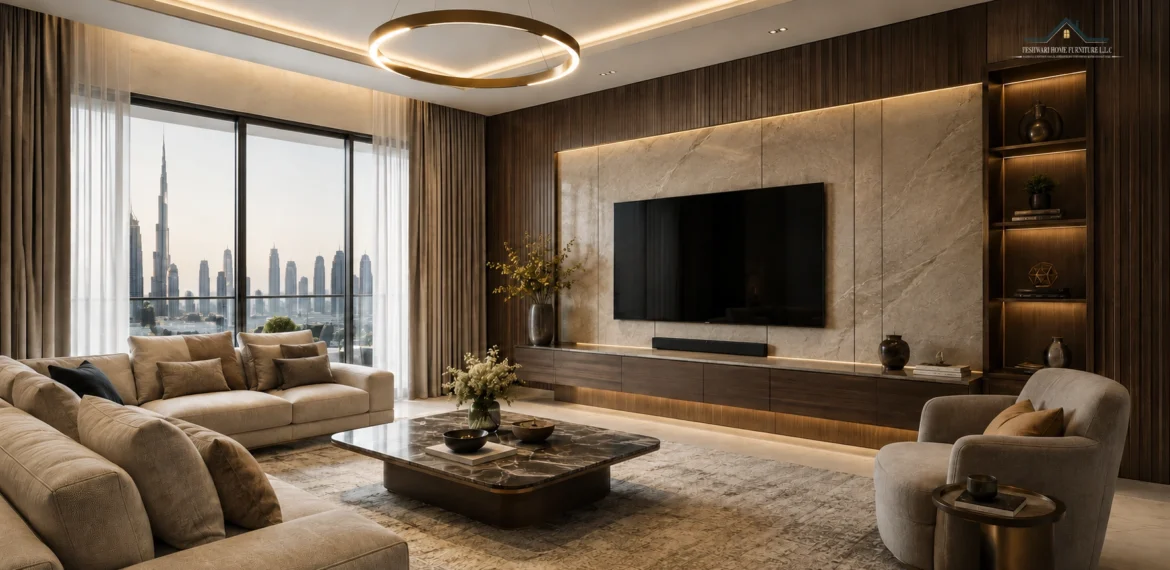
A living room can contain expensive furniture and still feel ordinary. In most cases, the problem is not the price of the sofa or coffee table; it is how the pieces relate to the room. Furniture that is too small, curtains hung too low, weak focal points, poor spacing, or too many matching finishes can make even high-quality pieces lose their impact.
An expensive-looking living room usually comes from proportion, visual balance and clear hierarchy rather than adding more decoration. Before buying another chair, table or accessory, it is more useful to identify which part of the room is making the space feel unfinished or visually flat. This guide explains the design mistakes that create that effect and, more importantly, which ones are worth fixing first.
Good Pieces Wrong Balance
If the sofa, rug and coffee table are out of proportion, the whole living room can feel disconnected. A coffee table that is too small can look lost beside a large sofa; as a starting point, aim for roughly two-thirds of the sofa’s length.
The rug should also connect the seating area rather than sit only beneath the table. Ideally, at least the front legs of the main seating pieces should rest on it. For spacing, around 35–45 cm between the sofa and coffee table usually keeps the area comfortable without making it feel fragmented. This is where custom furniture in Dubai can help, especially when standard-size pieces do not suit the room’s proportions. Before adding more decor, fix the scale, rug placement and spacing first.
When Everything Matches Too Well
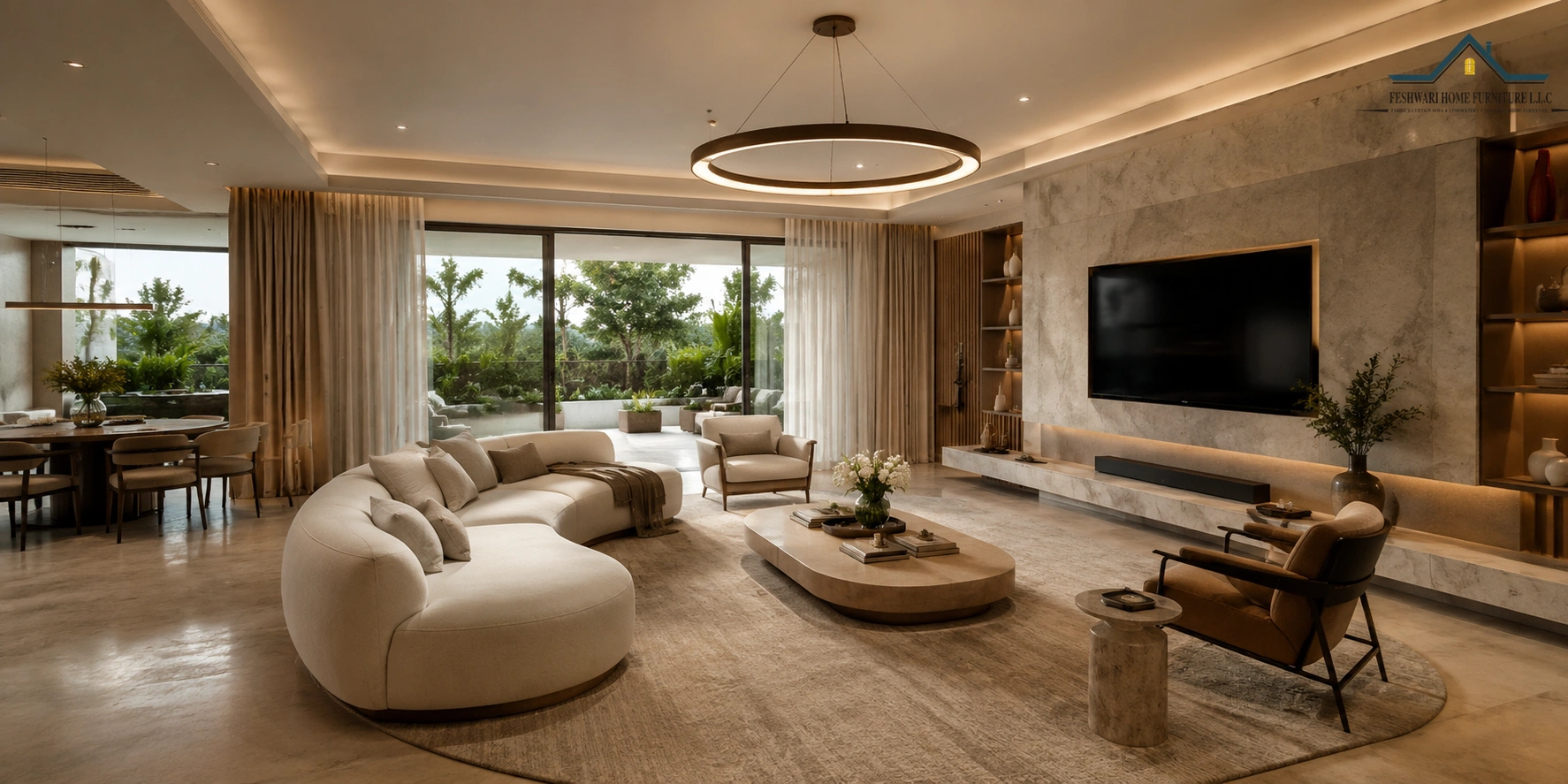
A perfectly matched sofa, armchairs, coffee table and side tables may seem like the safest way to create a polished living room, but too much coordination can make the space feel more like a furniture showroom than a finished home.The easiest sign to spot is repetition. If the same wood tone appears on every table, all upholstery has a similar texture, and every piece follows the same shape or style, there is nothing for the eye to discover. The room may look tidy, but it can also feel flat.
Instead of replacing the entire set, introduce contrast in one or two places. Pair a soft upholstered sofa with a stone or glass table, mix curved furniture with a few sharper lines, or use an accent chair that complements the sofa without copying it. The goal is not to make pieces clash; it is to avoid making every element look as though it was purchased as one package.
Your Curtains Are Shrinking the Room
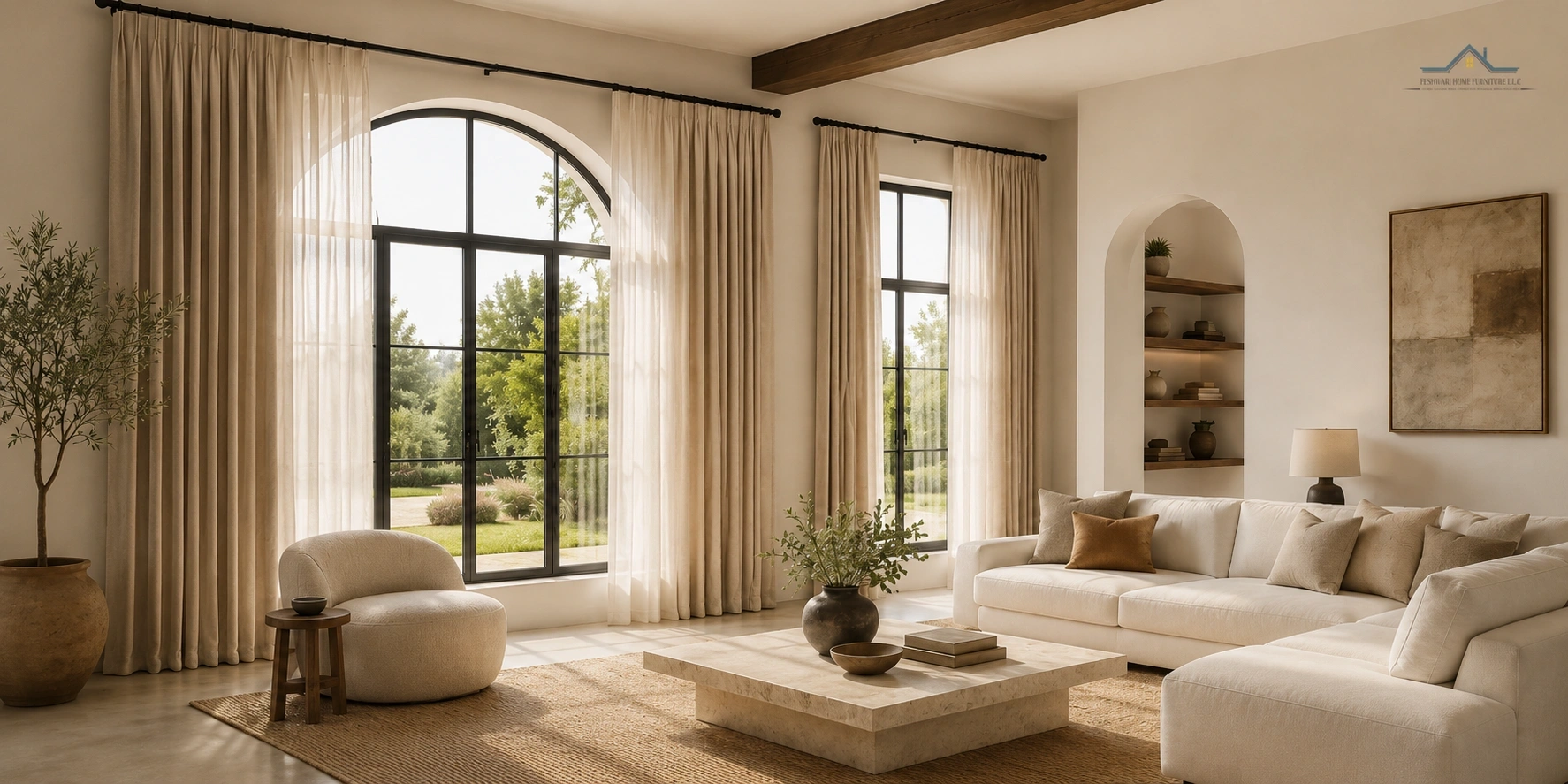
Curtains can make a living room look taller and more finishedor do the opposite. One common mistake is fixing the curtain rod directly above the window frame. This visually lowers the top line of the room and can make the ceiling feel shorter than it actually is.
A better approach is to hang the rod closer to the ceiling and extend it beyond the window on both sides. This makes the window appear larger and allows more glass to remain visible when the curtains are open. Floor-length curtains also create a stronger vertical line than panels that stop several centimetres above the floor.
Width matters too. Curtains that barely cover the window can look thin when closed. Using enough fabric to create proper folds gives the window more visual weight and makes the whole wall feel more intentional.
The TV Is Taking Over
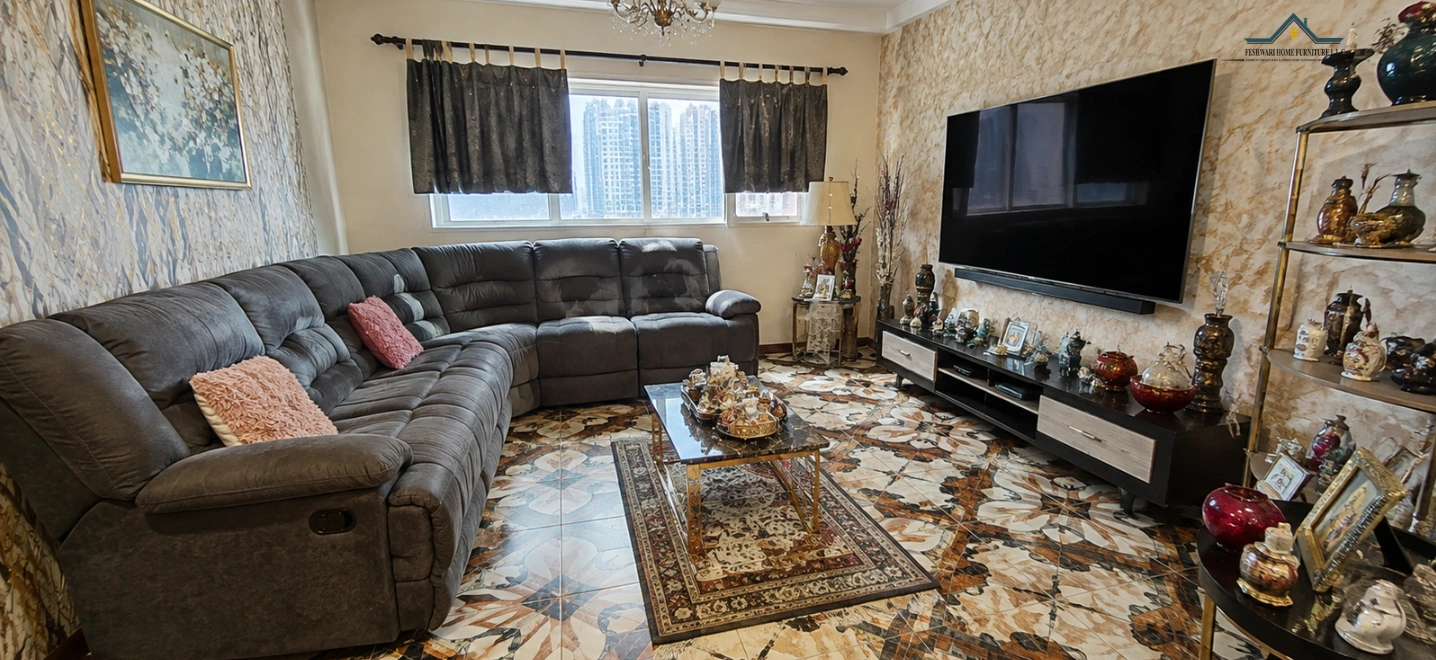
If the TV is the darkest and largest object in the room, it can easily become the only thing the eye notices. This is especially common when a large screen sits alone on a blank wall with visible cables or a small console underneath it.
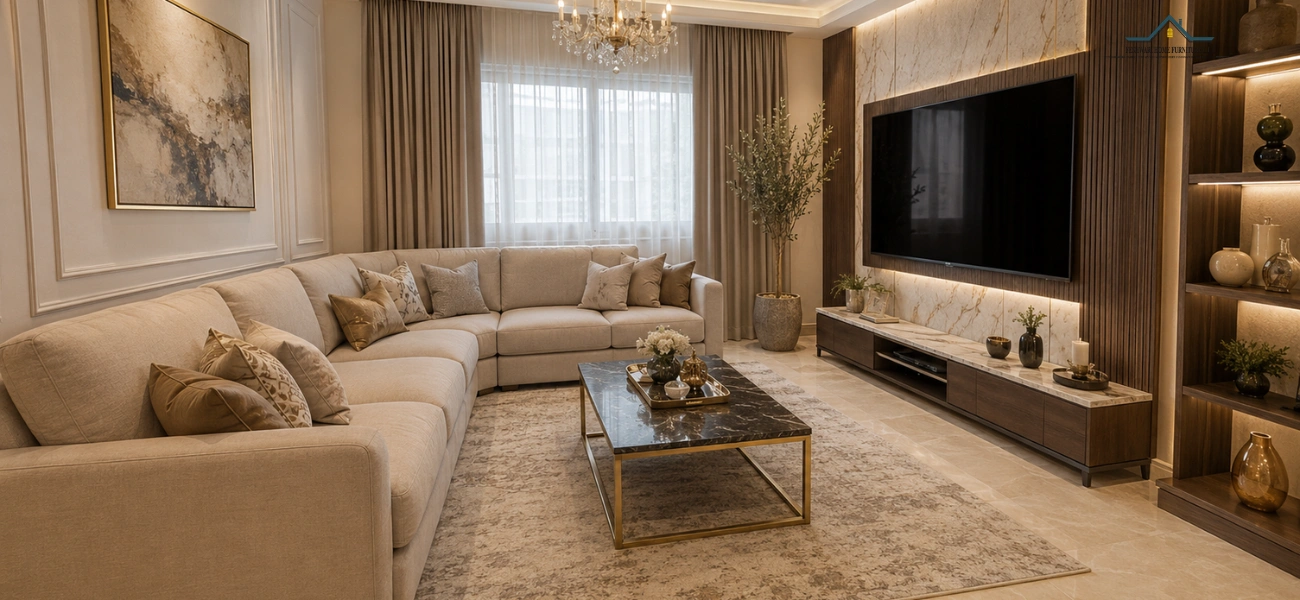
The fix is not to hide the TV, but to make it part of the wall. A wider console, built-in storage, textured wall finish or integrated lighting can give the screen visual context and stop it from looking like a separate black rectangle. The surrounding elements should be large enough to balance the TV without creating more clutter.
The Floor Is Working Against You
Flooring can quietly make the whole living room feel less refined. A very busy pattern, a finish that clashes with the furniture, or a floor tone that is too close to the sofa and tables can flatten the room because the main pieces lose contrast.
Look at the room from a distance. If the furniture seems to blend into the floor, introduce separation through a rug, different wood tones or stronger material contrast. If the floor itself is visually dominant, keep the larger furniture and textiles calmer so they do not compete with it. For rooms with unusual dimensions or a specific interior palette, custom flooring in Dubai can also help create a finish, tone and layout that works with the furniture rather than against it. The floor should act as a clean visual base that helps the main pieces stand out.
What Makes the Biggest Difference?
A living room usually looks more expensive when the main elements feel intentional, not simply expensive. Before adding more decor, fix the fundamentals first: furniture scale, spacing, visual clutter, the TV wall and the relationship between flooring and furniture.
If one change has to come first, start with the element that affects the largest part of the room. A badly sized sofa, an oversized TV wall or a floor that clashes with everything else will have more visual impact than cushions, lamps or small accessories. Luxury is often the result of better proportion and fewer competing elements.
Frequently Asked Questions
What makes a living room look cheap?
A living room can look cheap when furniture is out of proportion, too many small accessories compete for attention, curtains are poorly sized, or the TV and flooring do not work with the rest of the room. The issue is often visual balance rather than the actual cost of the furniture.
How can I make my living room look more expensive?
Start with the larger visual elements before buying more decor. Correct the scale of the sofa, coffee table and rug, improve curtain height, reduce visual clutter and create a clear focal point. These changes usually have more impact than adding expensive accessories.
Can too much matching furniture make a room look dated?
Yes. Using the same colour, material and design across every furniture piece can make the room feel flat or showroom-like. Mixing complementary shapes, textures and finishes usually creates a more natural and layered interior.
Does a larger rug make a living room look better?
In many rooms, yes. A rug that is large enough to sit beneath at least the front legs of the main seating pieces helps connect the sofa, chairs and coffee table. A rug that sits only under the coffee table can make the seating area feel fragmented.
What should I change first in an unfinished living room?
Start with the element causing the biggest visual problem. This may be an oversized sofa, incorrect rug size, dominant TV wall, unsuitable flooring or poorly positioned curtains. Fixing one major proportion problem is often more effective than adding several smaller decorative pieces.
Also Read : Curtains for Bedroom Blackout Sheer or Layered?