

Curtains for bedroom spaces should do more than complete the décor. The right choice needs to control unwanted light, provide privacy and work with the size, layout and daily use of the room. For most bedrooms, blackout curtains are useful where darkness is important, sheer curtains suit rooms that need softer daylight, and a layered combination offers the most flexibility throughout the day.
In Dubai homes, curtain selection also needs to account for strong sunlight, large windows and rooms that can receive direct heat for several hours. Fabric weight, lining, curtain length and even the position of the track can change how well a curtain performs. A well-chosen bedroom curtain should therefore balance light control, privacy, comfort and interior style, rather than being selected by colour or fabric alone. This guide explains how to compare the main options and choose the most suitable solution for different bedroom conditions.
Bedroom Curtain Essentials
Choosing curtains for bedroom spaces is mainly about controlling light leakage, privacy and heat around the window. For effective coverage, curtain fabric usually needs 1.5 to 2.5 times the track width; panels that are too narrow lose their folds when closed and often leave gaps at the sides.
For bedrooms that need stronger darkness, fabric alone is not enough. Blackout performance also depends on lining, track position, side returns and the gap above the window. Extending the track beyond both sides of the window and mounting it closer to the ceiling can reduce light entering around the curtain.
For daytime flexibility, a double-track system with sheer fabric at the front and blackout or dimout fabric behind it is often more practical than a single layer. It allows natural light during the day while keeping a separate layer available for privacy and stronger light control at night.
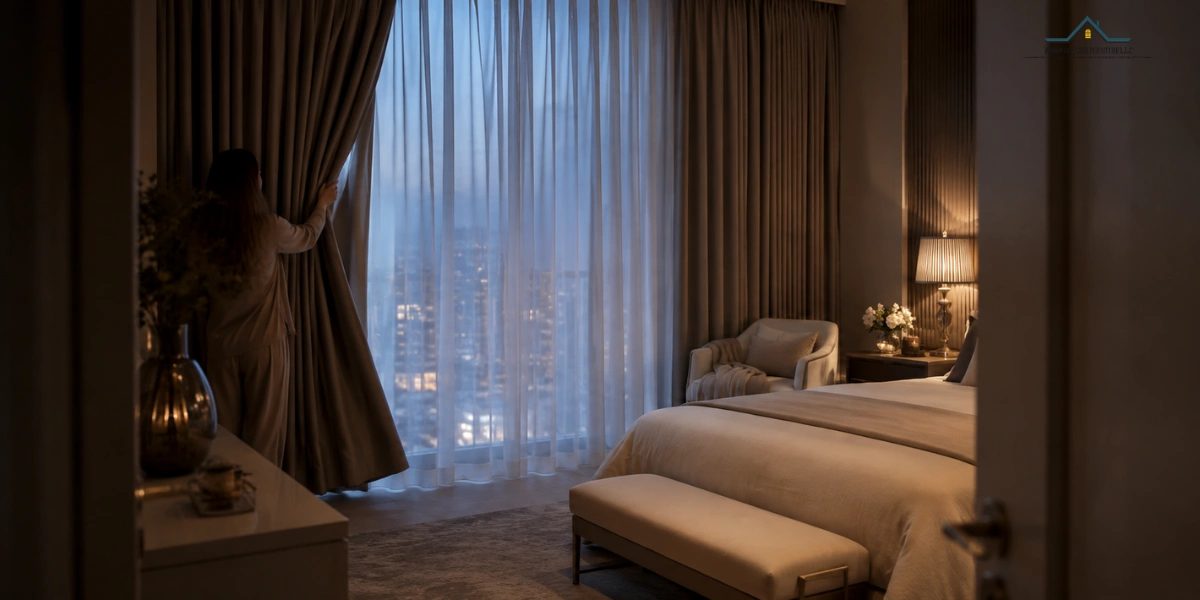
Blackout Sheer or Layered Curtains
Blackout curtains are the better choice when reducing outside light is the main priority, especially in bedrooms exposed to early morning sun or street lighting. Sheer curtains work differently; instead of blocking light, they diffuse it and keep the room brighter during the day, but they provide limited privacy after dark.
A layered system combines both functions. Sheer fabric can remain closed during the day to soften sunlight, while a blackout or dimout layer can be drawn at night. For bedrooms with large windows or changing light conditions, this setup usually provides more control than relying on a single curtain type.
Best Curtain Fabrics for Bedrooms
The best Custom Curtain in Dubai fabric depends on the level of light control, drape and maintenance the bedroom needs. Linen and linen blends create a softer, more natural fall and work well in bright bedrooms, especially when combined with a separate lining. Velvet and heavier woven fabrics provide more visual weight and are better suited to bedrooms where stronger light reduction and a more enclosed feel are preferred.
For everyday use, polyester blends are often easier to maintain and usually hold their shape better than delicate natural fabrics. It is also important to separate fabric choice from blackout performance: a curtain does not need to be made from a heavy dark fabric to block light. In many cases, the blackout lining or coated backing provides most of the light-blocking performance.

Choosing Bedroom Curtain Colors
Curtain color should respond to the amount of natural light, wall tone and size of the bedroom, not just match the furniture. In smaller or darker rooms, warm whites, beige, greige and other soft neutrals usually keep the space visually lighter. Bedrooms with strong daylight can handle deeper shades such as charcoal, olive, taupe or muted brown without feeling closed in.
For a more balanced look, curtains can sit one or two tones darker than the walls rather than matching them exactly. If the bed, headboard or rug already has a strong color, a quieter curtain tone usually works better and prevents the room from feeling visually heavy.
Curtain Size and Placement
Four measurements have the biggest effect on curtain fit. Select a point to see the recommended range.
Fabric fullness: using around 1.5–2.5 times the track width keeps the curtain folded instead of stretched flat when closed.
Side extension: extending the track beyond the opening improves coverage and reduces visible light gaps at the edges.
Floor clearance: finishing close to floor level gives full-height curtains a cleaner proportion without unnecessary dragging.
Track position: placing the track higher creates a longer vertical line and can reduce the light gap above the curtain.

- Too narrow Reduces folds and coverage.
- Track too low Makes the window look shorter.
- Sheer only Limited privacy at night.
- Blackout side gaps Allow unwanted light in.
Making the Right Bedroom Curtain Choice
The best curtains for bedroom spaces are not defined by one fabric or style. The right choice depends on how much daylight enters the room, the level of privacy required, window dimensions and how dark you want the bedroom to be at night.
For maximum flexibility, a combination of sheer and blackout curtains works well in many bedrooms, while correct fabric width, track placement and floor length determine how well the curtains actually perform. Choose the function and fit first, then select the fabric and colour that complement the interior.
Frequently Asked Questions
What type of curtains are best for a bedroom?
The best bedroom curtains depend on natural light, privacy and how dark you want the room to be. Blackout curtains provide stronger light control, while sheer curtains preserve daylight. A layered combination of sheer and blackout curtains offers the most flexibility.
Are blackout curtains always better for bedrooms?
Not always. Blackout curtains are useful for bedrooms exposed to strong morning sunlight, street lighting or other exterior light. A sheer and blackout combination is more flexible when daylight is also important.
Can people see through sheer curtains at night?
Yes. Visibility from outside increases when the bedroom lights are on. Sheer curtains work well for daytime light filtering, but an opaque or blackout layer provides better privacy at night.
Should bedroom curtains touch the floor?
Full-length bedroom curtains can lightly touch the floor or finish around 1–2 cm above it. This creates a clean finish without making the curtains look too short.
Do blackout curtains need to be dark coloured?
No. Blackout performance depends mainly on the lining or backing rather than the visible fabric colour. Light-coloured curtains can still provide strong light control with an effective blackout lining.
How to Clean Outdoor Furniture 7 Easy Steps