
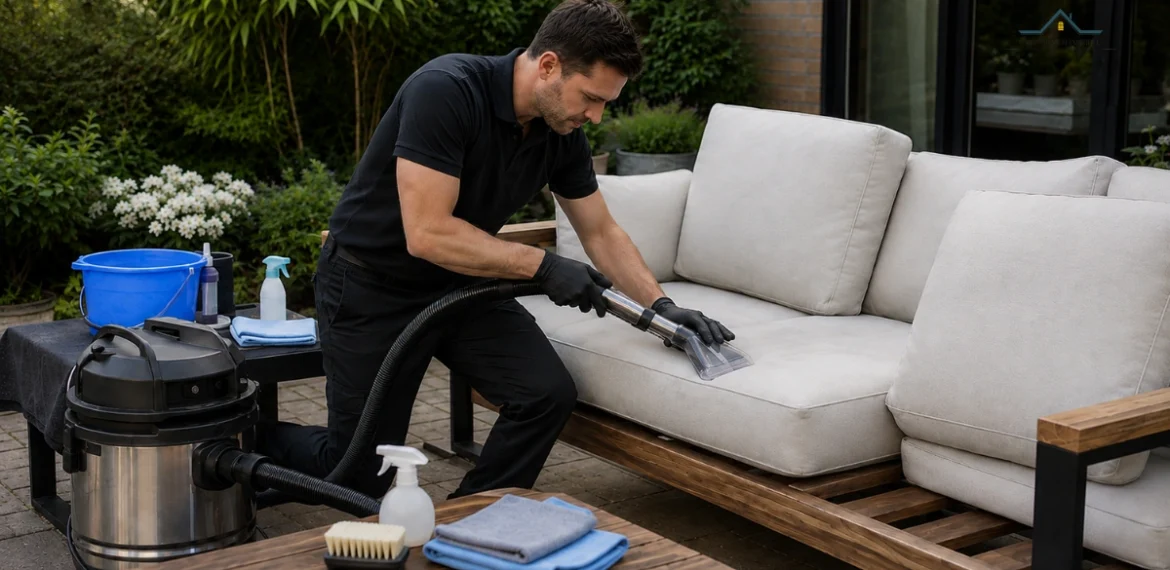
How to clean outdoor furniture safely starts with removing loose dust, washing the surface with warm water and mild dish soap, then rinsing and allowing it to dry completely. Use a soft cloth or brush, and avoid strong bleach, abrasive tools or pressure washing unless the material can handle them. The correct method depends on whether the furniture is made from wood, metal, plastic, rattan or outdoor fabric.
Before cleaning, remove cushions, check the care label and test the solution on a hidden area. Light dirt can usually be removed with regular washing, while mould, rust, food stains and bird droppings may need a more targeted treatment. This guide explains the safest cleaning method for each material, the mistakes that can cause damage and the simple steps that help outdoor furniture stay clean for longer.
Outdoor Furniture Cleaning Supplies
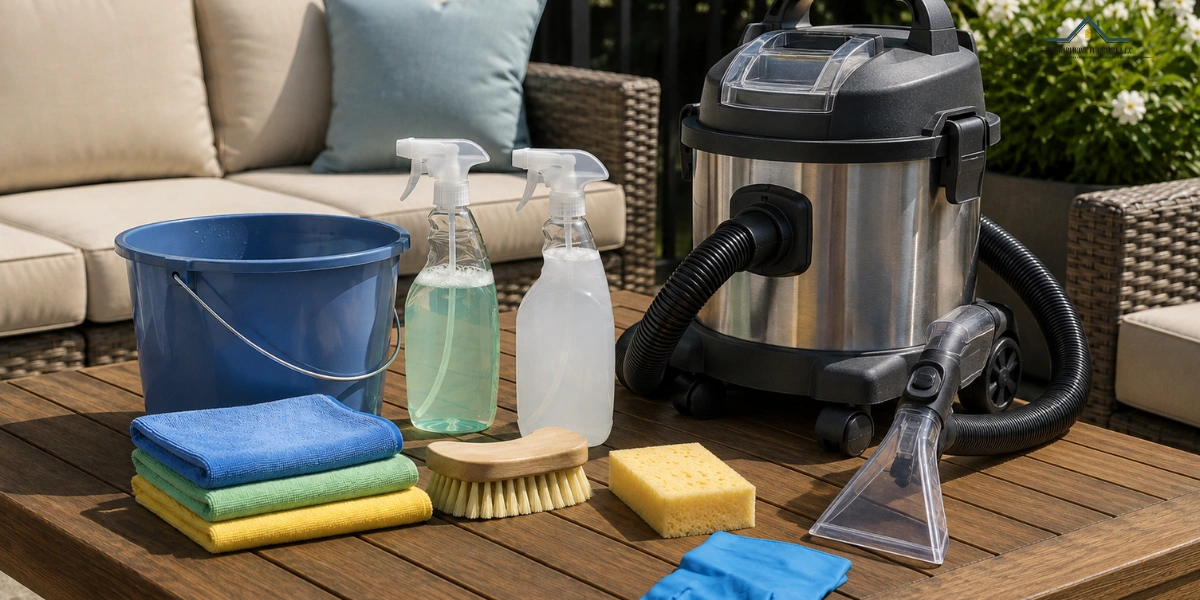
Start with warm water, mild dish soap, a microfibre cloth and a soft-bristle brush. A garden hose is useful for rinsing, while a dry towel helps remove excess moisture. Avoid steel wool, harsh chemicals and abrasive cleaners, as they may scratch surfaces or damage protective finishes. Keep a material-specific cleaner nearby only when treating wood, metal, fabric or stubborn stains.
1.Remove Cushions and Loose Dirt
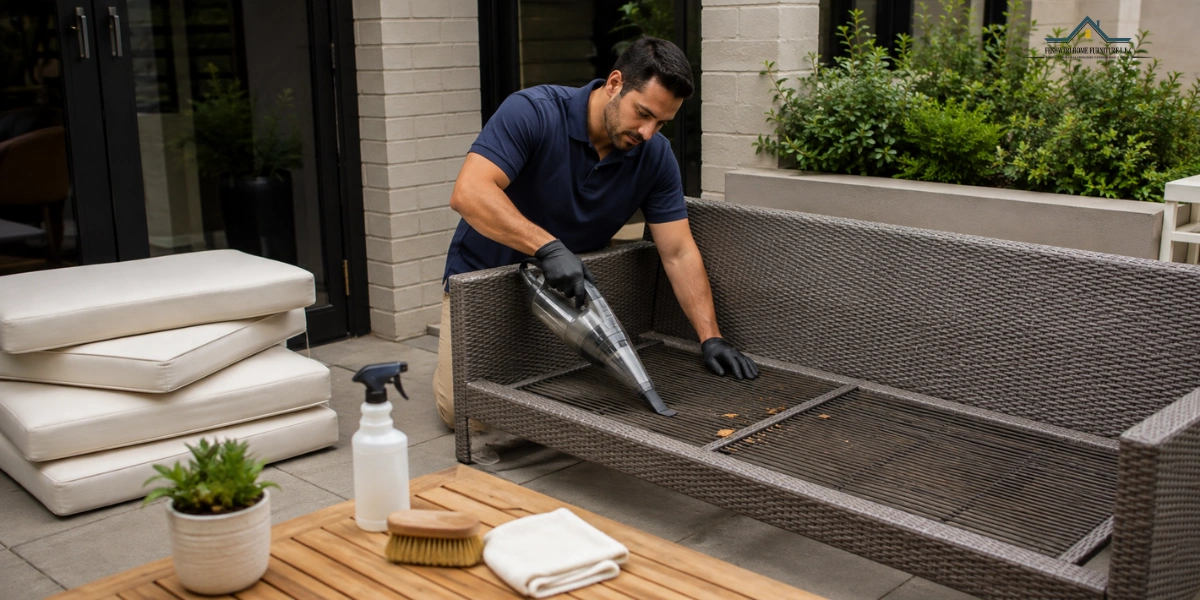
Remove all cushions, covers and detachable accessories before washing the furniture. Use a soft brush, handheld vacuum or dry microfibre cloth to clear dust, leaves, sand and debris from the surface, joints and underside. Removing dry dirt first prevents it from turning into mud during washing and reduces the risk of scratching the finish. Check cushion care labels before cleaning, as some covers are machine washable while others require spot cleaning.
2.Identify the Furniture Material
Check whether the furniture is made from wood, metal, plastic, rattan or outdoor fabric before applying any cleaner. Each material reacts differently to water, scrubbing and chemical products. Wood may need limited moisture, metal should be checked for rust, and woven furniture can trap water between the fibres. If the material is unclear, test the cleaning solution on a hidden area and wait for it to dry before cleaning the full surface.
3.Prepare a Mild Cleaning Solution
Fill a bucket with warm water and add a small amount of mild dish soap. The solution should be lightly soapy rather than highly concentrated, as excess detergent can leave residue and affect some finishes. This gentle method is also suitable for maintaining outdoor upholstery in Dubai, where dust and frequent outdoor use can make regular cleaning necessary. Avoid bleach, ammonia and strong household cleaners unless the furniture manufacturer specifically recommends them. Dip a soft cloth or brush into the solution, remove excess water and test it on a hidden area before cleaning the entire surface.
4.Wash the Furniture Surface
Clean the furniture from top to bottom using a soft cloth, sponge or soft-bristle brush. Work in small sections so the cleaning solution does not dry on the surface. Pay extra attention to corners, joints, armrests and the underside, where dirt often builds up. Use gentle pressure and avoid soaking wooden parts, woven fibres or metal joints. A pressure washer should only be used when the manufacturer confirms it is safe for the material.
Wooden Outdoor Furniture
Gentle CleaningUse warm water mixed with a small amount of mild dish soap.
Clean with a soft cloth or brush, following the direction of the wood grain.
Avoid soaking, bleach, steel wool and aggressive pressure washing.
Dry completely and renew the protective oil or sealer when required.
Care Tip: Clean spills quickly to reduce staining and moisture absorption.
Metal Outdoor Furniture
Rust PreventionUse mild soapy water for aluminium, steel and coated metal.
Use a microfibre cloth or non-abrasive sponge to protect the finish.
Avoid steel wool, rough brushes and highly acidic cleaning products.
Dry joints and screws carefully and inspect the surface for early rust.
Care Tip: Repair chipped paint before moisture reaches the exposed metal.
Rattan and Wicker Furniture
Low MoistureUse diluted mild soap without applying too much water.
Use a small soft brush to reach dirt trapped between woven sections.
Avoid soaking the weave or applying strong direct water pressure.
Allow air to pass through every woven section until fully dry.
Care Tip: Brush or vacuum the weave regularly to prevent deep dirt buildup.
Plastic Outdoor Furniture
Easy MaintenanceWarm water and mild detergent are suitable for regular cleaning.
Use a soft sponge, cloth or soft brush for textured surfaces.
Avoid abrasive powders and rough tools that may dull the surface.
Wipe the furniture dry to reduce water marks and dust buildup.
Care Tip: Keep plastic furniture shaded when possible to reduce fading.
Outdoor Cushions and Fabric
Check Care LabelUse a fabric-safe detergent approved by the care instructions.
Use a soft brush or cloth, or machine wash removable covers when allowed.
Avoid harsh bleach, high heat and storing cushions while damp.
Stand cushions upright until both sides and the inner filling are dry.
Care Tip: Remove fresh spills before they absorb deeply into the fabric.
5.Treat Stains and Mould
Treat stubborn marks only after the general dirt has been removed. For food, drink or bird-dropping stains, apply mild soapy water and leave it on the area for a few minutes before wiping gently. This careful approach is especially important when you customize outdoor cushions, as unsuitable cleaners may affect the selected fabric, colour or protective finish. For mould or mildew, use a cleaner approved for the furniture material and test it on a hidden section first. Avoid mixing cleaning products or scrubbing aggressively, as this can fade fabric, damage wood finishes or scratch metal and plastic surfaces.
6.Rinse Away the Cleaner
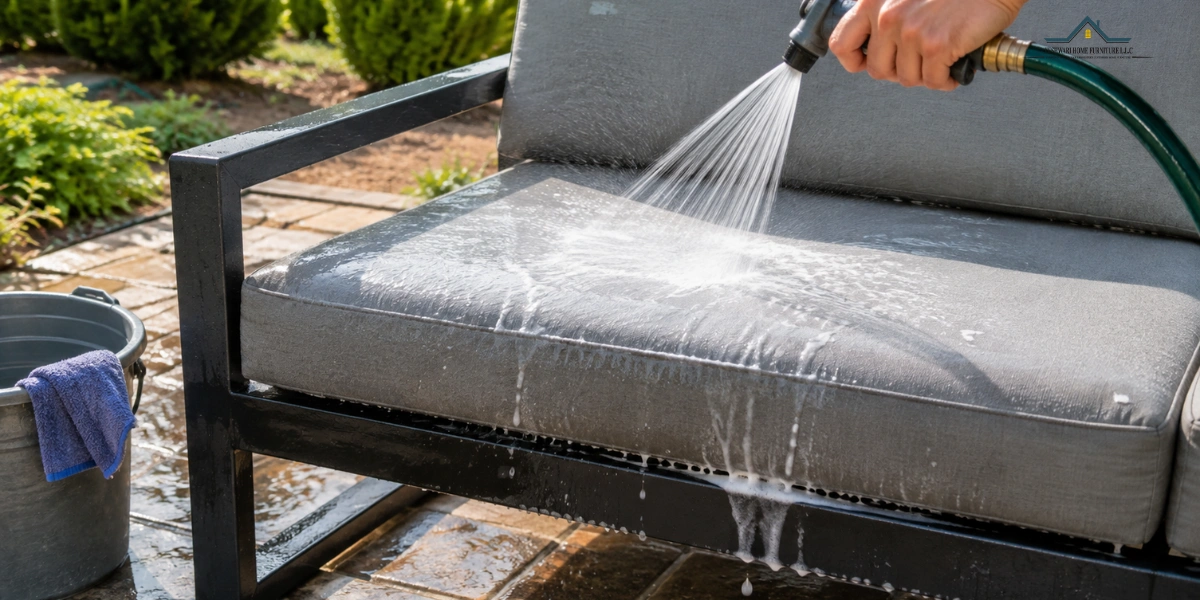
Rinse the furniture with clean water to remove soap, loosened dirt and any remaining cleaning product. Use a garden hose with gentle pressure or wipe the surface several times with a clean damp cloth. Check joints, textured areas and woven sections carefully, as residue can collect in these places. Do not leave soap on the surface, because it may cause streaks, attract more dust or affect the finish after drying.
7.Dry the Furniture Completely
Remove excess water with a clean towel, then leave the furniture in a well-ventilated area until every surface, joint and cushion is completely dry. Keep cushions standing upright so air can circulate around both sides. Do not cover, store or use the furniture while it is still damp, as trapped moisture can cause mould, odours, rust and damage to wooden finishes. Return the cushions only after the frames and fabric have dried fully.
Conclusion
Cleaning outdoor furniture properly does not require strong chemicals or complicated equipment. The best results come from removing loose dirt first, using a mild cleaner suitable for the material, rinsing thoroughly and allowing every part to dry completely. The same care principles also apply to a Custom sofa Dubai homeowners may use in covered patios or semi-outdoor areas. Regular light cleaning prevents stains, mould and rust from becoming difficult to remove. By following the correct method for wood, metal, plastic, rattan and outdoor fabric, you can protect the finish and keep your furniture ready for everyday use.
Frequently Asked Questions
What is the best cleaner for outdoor furniture?
Warm water mixed with a small amount of mild dish soap is suitable for most outdoor furniture. Test the solution on a hidden area first, especially when cleaning wood, coated metal or coloured fabric.
How often should outdoor furniture be cleaned?
Remove loose dust and debris every few weeks and complete a deeper clean every few months. Furniture exposed to heavy dust, rain, trees or frequent use may need more regular cleaning.
Can a pressure washer be used on outdoor furniture?
A pressure washer should only be used when the furniture manufacturer confirms that it is safe. Strong water pressure can damage wood grain, loosen woven fibres and remove paint or protective finishes.
How can mould be removed from outdoor furniture?
Brush away loose mould outdoors, then apply a cleaner approved for the furniture material. Test the product first, rinse the surface thoroughly and leave the furniture in a ventilated area until completely dry.
Can outdoor cushions be washed in a washing machine?
Some removable outdoor cushion covers are machine washable, but the care label should always be checked first. Fixed covers and cushion fillings usually require spot cleaning followed by complete air drying.
Also Read : How to Match a Coffee Table with a Sofa