
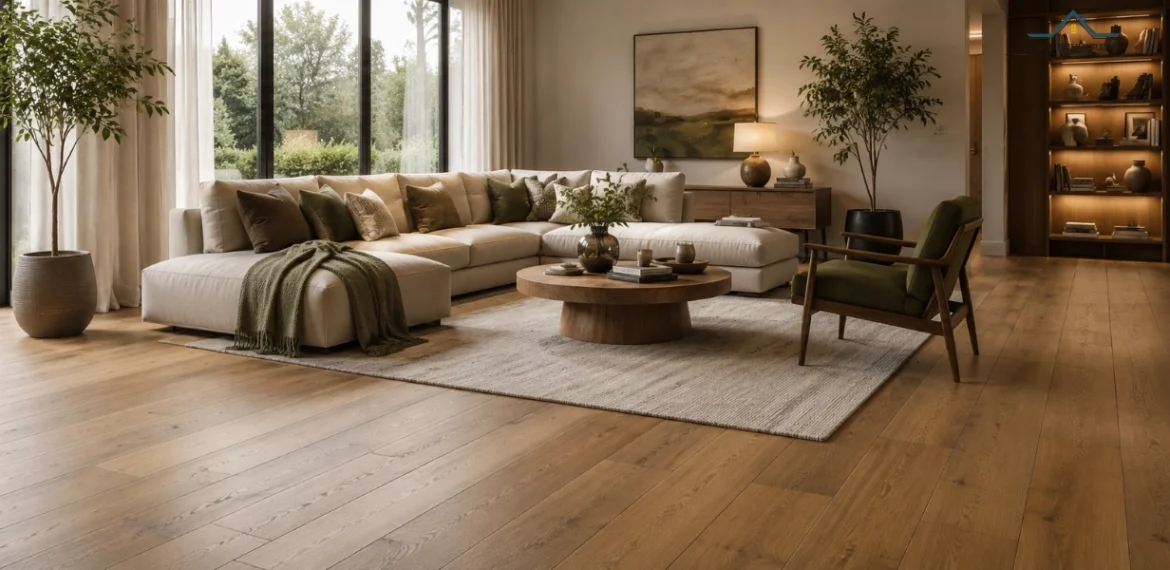
Best flooring for living room spaces should be chosen based on how the room is actually used. A high-traffic family area needs durable, easy-to-clean flooring, while a formal living room gives you more freedom to prioritise appearance, texture and natural materials.
If you have children or pets, choose a surface that can handle spills, scratches and frequent cleaning without showing every mark. Also consider whether the living room connects to a kitchen, hallway, dining area or balcony, as these areas can bring in more dirt, moisture and foot traffic. In open-plan interiors, continuous flooring can create a more unified look, provided the material performs well across all connected spaces.
Consider Flooring Feel and Comfort
Flooring changes more than the look of a living room; it also affects comfort, temperature and sound. Wood and engineered wood feel warmer and softer underfoot, while porcelain, tile and stone feel cooler and firmer. In Dubai homes, that cooler feel can be comfortable, but hard surfaces may also make a large room feel more echoey.
If comfort is a priority, engineered wood, LVT or carpet can feel easier underfoot. For a cleaner, more solid finish with lower day-to-day maintenance, tile or porcelain may make more sense. The key is to decide whether your priority is warmth and comfort, or durability and easy maintenance before choosing the final material.
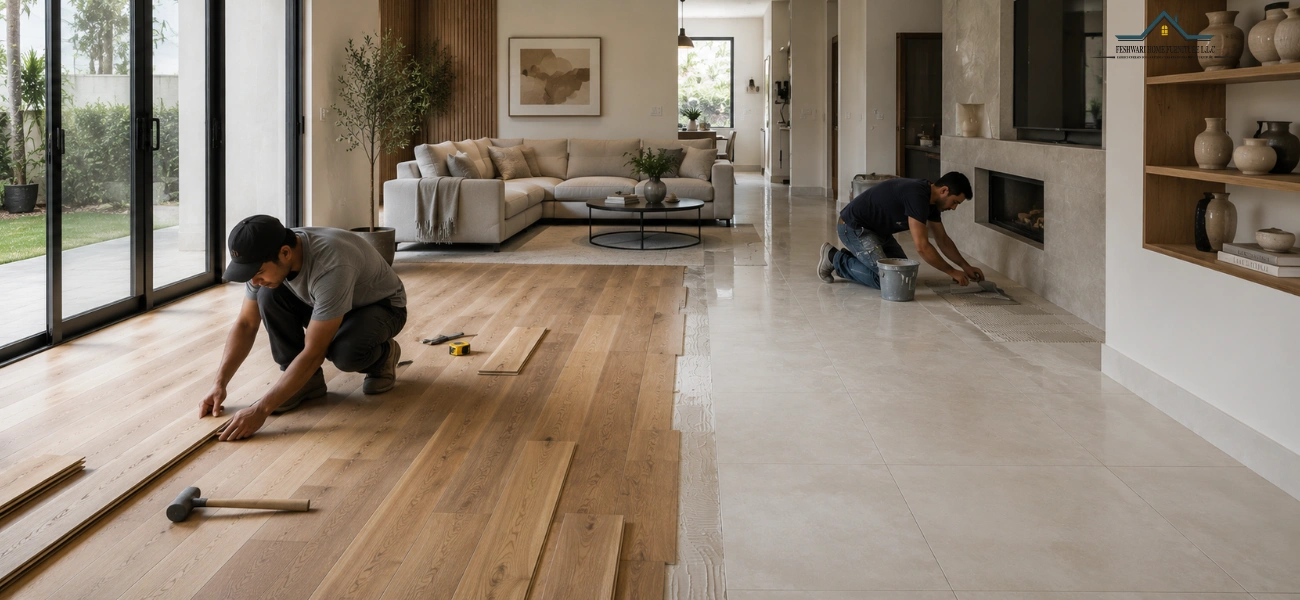
Which Flooring Material Works Best?
Once you know how the room is used and what level of comfort you want, compare the materials based on their real-world performance. Engineered wood gives a natural, warm appearance and works well in premium living rooms, but it needs more care against scratches and moisture. LVT is easier to maintain, handles daily traffic well and can imitate wood or stone, although it does not have the same natural feel.
Porcelain or tile is highly durable, easy to clean and suitable for busy homes, but it feels harder and cooler underfoot. Laminate offers a wood-like look at a lower cost, although damaged areas are harder to repair. Carpet provides the most softness and sound absorption, but requires more cleaning and is less practical where spills or pets are common. The best choice is usually the material whose main weakness you can comfortably live with, not simply the one with the longest list of advantages.
| Flooring Type | Best For | Maintenance | Comfort | Main Trade-Off |
|---|---|---|---|---|
| Engineered Wood | Natural, premium living rooms | Medium | High | More sensitive to scratches and moisture |
| LVT | Busy family homes | Low | Medium | Less natural feel than real wood |
| Porcelain / Tile | High-traffic, low-maintenance spaces | Low | Low | Hard and cool underfoot |
| Laminate | Budget-conscious interiors | Low | Medium | Damaged sections are harder to repair |
| Carpet | Quiet, comfortable living rooms | High | Very High | More difficult to clean |
Match the Flooring With Your Furniture
Flooring should be chosen with the main furniture already in mind. A dark floor paired with a dark sofa and heavy wood furniture can make a living room feel visually dense, while some contrast helps each element remain distinct.
Pay attention to undertones, not just colour. Warm oak flooring usually works more naturally with beige, cream, camel and warm wood finishes, while cooler grey or stone flooring can suit furniture with cooler undertones. Mixing warm and cool tones can still work, but there should be another element such as a rug, table or curtain that connects them.
If you are planning custom furniture in Dubai, consider the flooring and furniture finishes together from the start. Choosing sofa fabrics, wood tones and flooring as one palette makes it easier to control contrast and avoid mismatched undertones. Before ordering, place the flooring sample next to the sofa fabric, rug and main furniture finishes. This gives a more accurate result than judging the floor on its own.
Check the Flooring in Your Actual Light
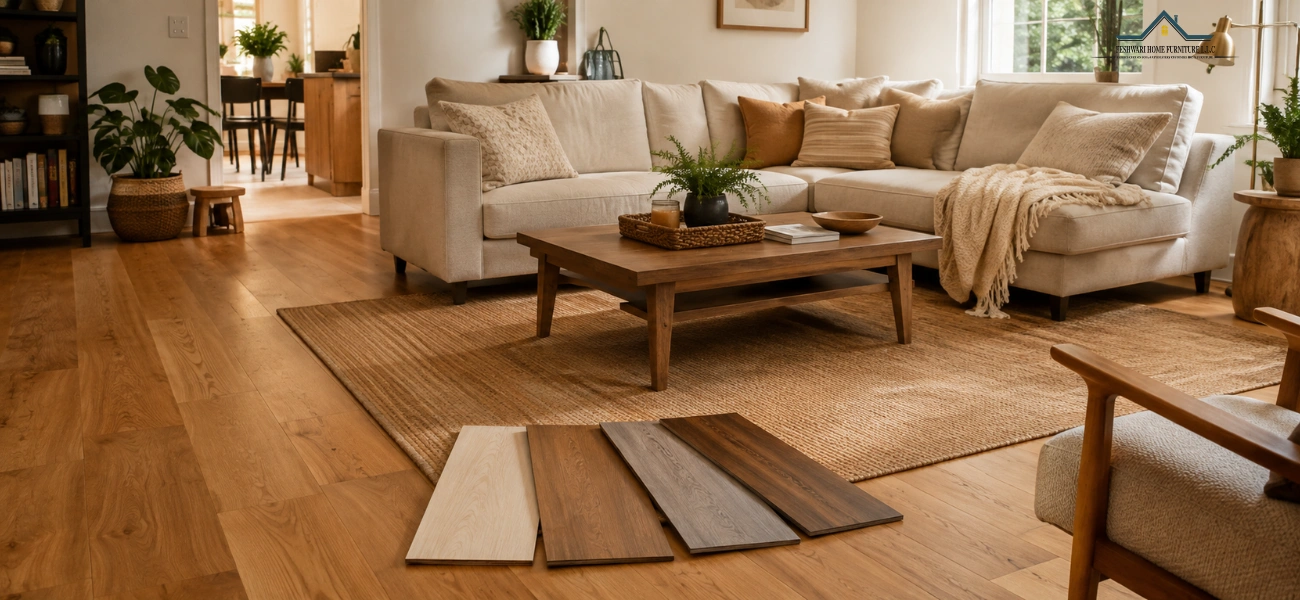
A flooring sample can look very different in a showroom than it does in your living room. Natural daylight can make colours appear lighter, while warm artificial lighting may bring out yellow or red undertones that were less noticeable before.
Before ordering, place the sample in different parts of the room and check it in morning light, afternoon light and at night. Also look at it next to the sofa and rug, because surrounding colours can change how the flooring is perceived.
If you are considering Custom flooring in Dubai, ask to review a larger sample or finish board in the actual room whenever possible. This gives you a more accurate idea of the colour variation, pattern and finish across the space than relying on a small showroom sample.
Flooring and Room Size
- Small rooms Use simple patterns and consistent colours.
- Large rooms Larger planks or tiles usually look more balanced.
- Open-plan spaces Continuous flooring creates better visual flow.
- Mixed flooring Change materials at a clear boundary.
- Pattern scale Match the flooring size to the room.
Make the Right Flooring Choice
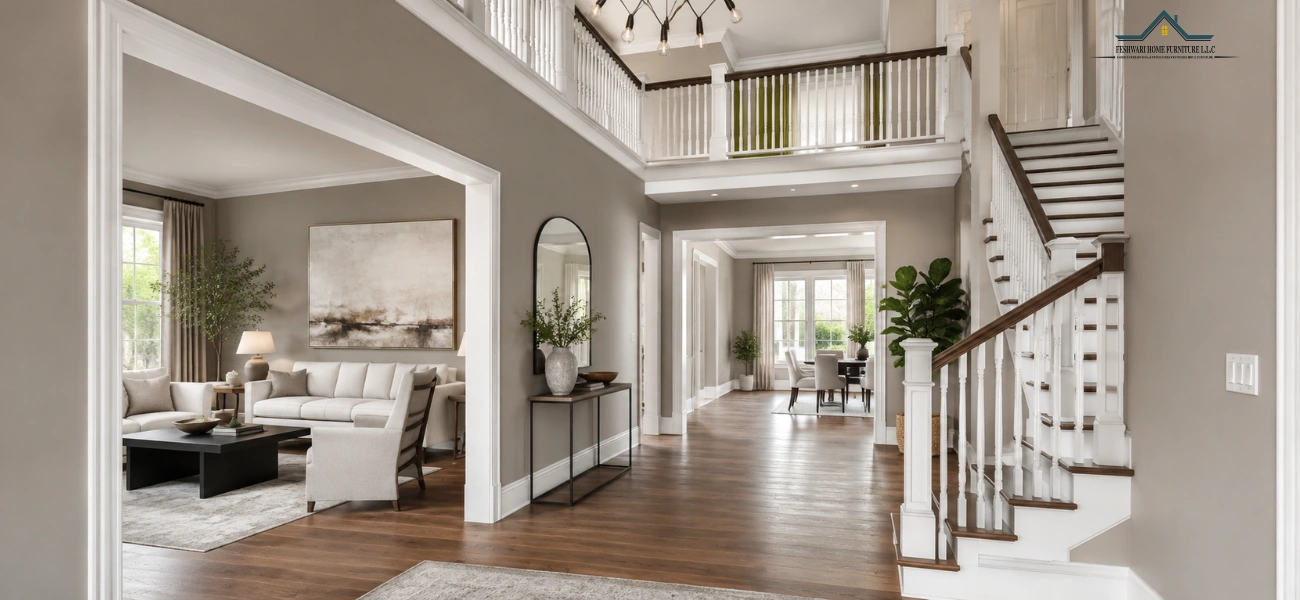
The best flooring for living room spaces should match how the room is actually used. If the space gets heavy daily traffic, durability and easy maintenance should lead the decision. If comfort and a warmer appearance matter more, materials such as engineered wood may be a better fit.
Before ordering, compare real samples inside the room and check them beside your sofa, rug and existing finishes. The right flooring should still feel practical and visually balanced after months of everyday use—not just look good on installation day.
Frequently Asked Questions
What is the best flooring for a high-traffic living room?
LVT, porcelain and other durable, low-maintenance surfaces are practical choices for busy living rooms. The best option should resist everyday wear while remaining easy to clean.
Is engineered wood a good choice for a living room?
Yes. Engineered wood works well when you want a warm, natural appearance with more dimensional stability than traditional solid wood. It may still require extra care against scratches and moisture.
What flooring is best for living rooms with pets or children?
Choose flooring that handles spills, regular cleaning and daily wear without showing every small mark. LVT and porcelain are often practical options because they combine durability with easier maintenance.
Should living room and dining room flooring match?
In open-plan spaces, continuous flooring usually creates a cleaner visual flow between living and dining areas. Different materials can still work when the transition follows a clear architectural boundary.
Should I choose flooring before or after the furniture?
Ideally, consider both together. Compare flooring samples with your sofa fabric, rug and main furniture finishes so the undertones, contrast and overall balance work within the finished room.
Also Read: Why Your Living Room Doesn’t Look Expensive?