
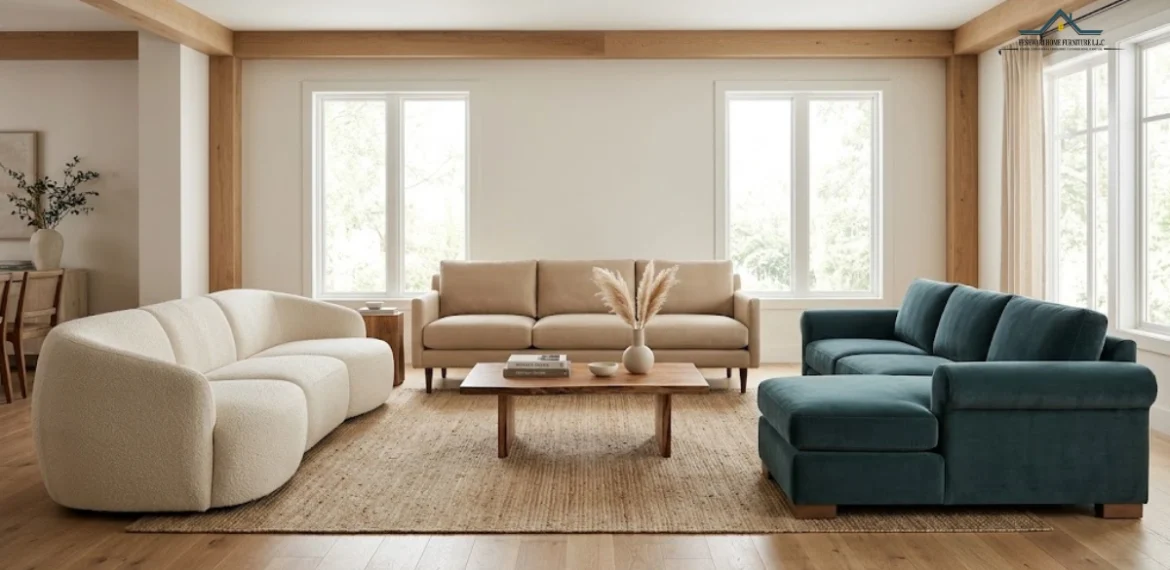
Buying a sofa is not just about choosing a style or colour. The right size, seating comfort, build quality and fabric determine whether a sofa works well in everyday use. Even a beautiful sofa can become a poor choice if it overwhelms the room, feels uncomfortable or uses a fabric that does not suit your lifestyle. This sofa buying guide covers sofa types, sizes, seat depth and height, construction and fabrics to help you choose an option that fits your space and remains comfortable and practical over time.
Standard Sofa
With a standard sofa, a larger overall size does not always mean more seating space. Wide arms and a bulky back can take up a surprising amount of the sofa’s footprint, so two sofas that look similar in size may offer very different usable seating space.
If your room is limited, pay attention to the actual seat width, not just the outside dimensions. Slimmer arms can give you more room to sit without making the sofa itself larger. Seat depth matters too. A deeper seat is better for lounging, but if you usually sit upright or use the sofa for guests, too much depth can leave your back unsupported unless you add extra cushions.
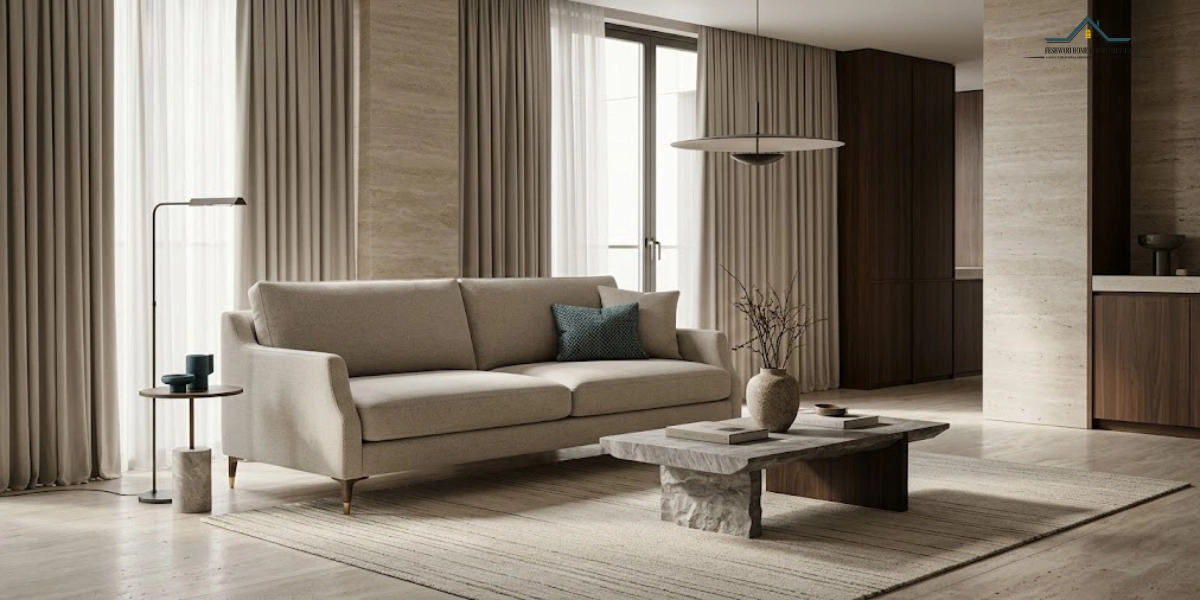
Sectional vs L-Shaped Sofa
sectional or L-shaped sofa can give you more seating without adding separate chairs, but the direction of the chaise matters as much as the sofa size. If it extends into the main walking route, the room can feel blocked even when the sofa technically fits.
Before choosing one, look at where people naturally enter, cross and leave the room. The open side of the sectional should support that movement rather than interrupt it. This style works especially well if you lounge often or need more continuous seating, but it gives you less flexibility later. A standard sofa can usually be moved or paired differently; a large sectional is more dependent on the exact shape of the room.
Modular Sofa Best for Flexible Spaces
Modular sofas work well if your room layout or seating needs may change over time. Depending on the design, you can rearrange the sections, separate them or add extra modules later. This flexibility can be especially useful when choosing custom furniture in Dubai, where layouts often need to suit specific room dimensions rather than standard furniture sizes.
Before buying, check how the sections connect and whether additional modules can be purchased separately. Some modular sofas look flexible at first, but become difficult to expand once that specific model is discontinued. The main trade-off is stability. Lightweight or poorly connected sections may move apart during everyday use. A modular sofa is therefore a strong choice for flexibility, but less suitable if you want a completely fixed seating arrangement.
Loveseat Sofa for Small Spaces
loveseat is a good choice when you need comfortable seating but do not have enough room for a full-size sofa. It can work as the main sofa in a compact living room or as extra seating beside a larger sofa.
Before buying, check the actual seat width, not just the overall size. Some loveseats use wide arms or thick cushions that reduce the usable seating space more than expected. The main limitation is capacity. A loveseat may fit the room perfectly but can become impractical if you regularly seat three or more people. It works best when saving floor space matters more than maximizing seating.
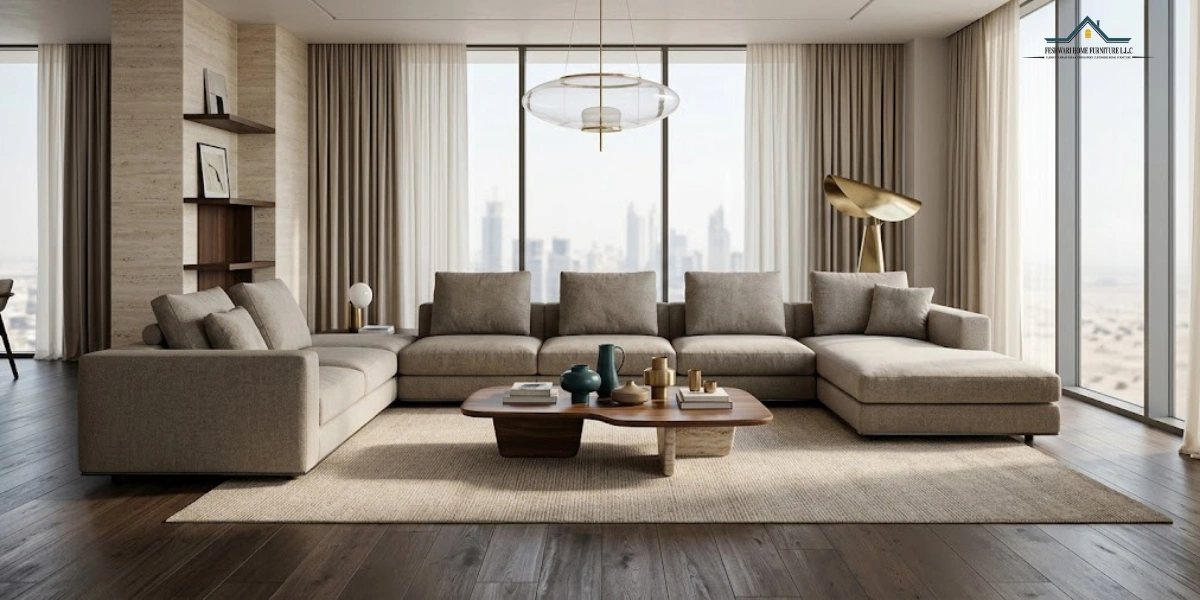
Sofa Bed for Guest Spaces
If you need occasional sleeping space but do not have a separate guest room, a sofa bed can solve both needs without adding another piece of furniture. Do not judge it only by how comfortable it feels as a sofa. Check the sleeping surface, opening mechanism and how much floor space it needs when fully extended. Some models sit well but become awkward once opened, especially in tighter rooms.
If standard sofa-bed dimensions do not work for your space, a Custom sofa in Dubai can be designed around the available room, required sleeping area and preferred opening mechanism. The trade-off is usually flexibility versus simplicity. A sofa bed gives you two functions in one piece, but it is often heavier and more complex than a standard sofa, so it makes the most sense when the bed function will actually be used.
How to Measure Your Space for a Sofa?
- Overall width Make sure the sofa does not crowd nearby furniture or doorways.
- Sofa depth Deep sofas can take up much more floor space than expected.
- Walking space Leave enough room to move comfortably around the sofa.
- Door and cabinet clearance Check that doors, drawers and nearby furniture can still open properly.
- Space in front of the sofa Make sure a coffee table or ottoman will not make the area feel cramped.
- Delivery route Measure doors, hallways, stairs and lifts before ordering.
- Real footprint Mark the sofa’s dimensions on the floor with tape to see how much space it will actually occupy.
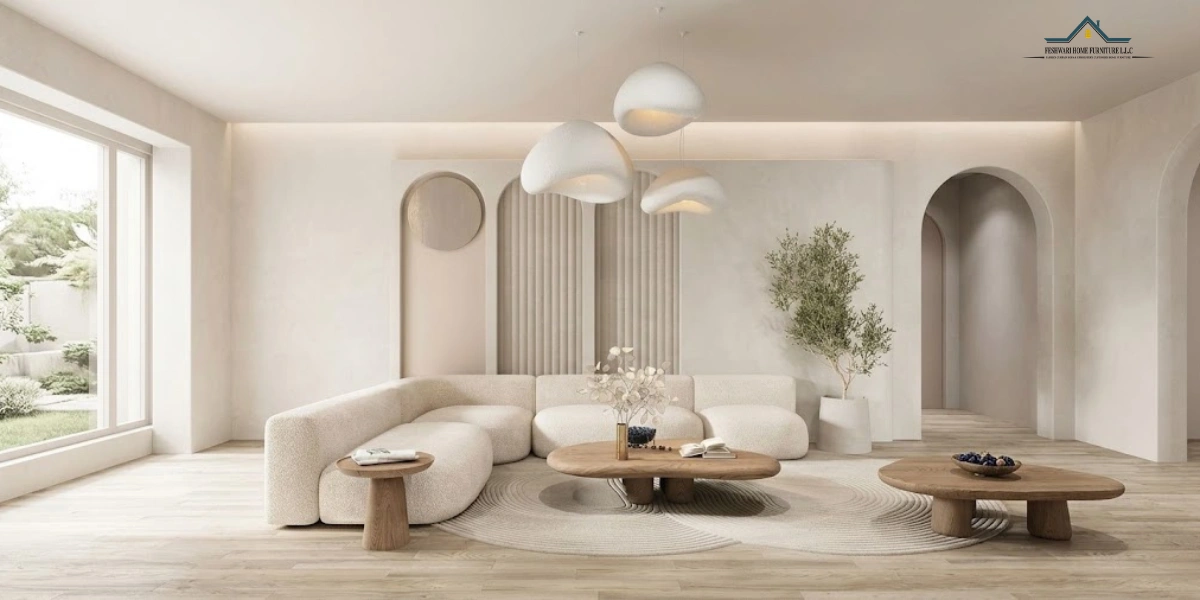
Choosing the Right Sofa Fabric
Choose fabric based on how the sofa will actually be used, not only on how it looks under showroom lighting. A sofa used every day needs a different upholstery choice from one placed in a formal room that is only used occasionally.
For busy households, look for fabric that can handle frequent contact, stains and cleaning without losing its appearance quickly. If the sofa receives strong daylight, also consider how the material reacts to prolonged sun exposure, because some colours and fabrics can fade faster than expected.
Texture matters as well. A heavily textured fabric may hide minor marks better, but it can also trap dust or pet hair more easily. Smooth fabrics are often easier to wipe or vacuum, although some can show stains and wear more clearly. The best fabric is the one whose maintenance matches the way you actually live.
Sofa Construction and Cushion Quality
A sofa may feel comfortable in the showroom and still lose its shape quickly if the structure underneath is weak. The frame should feel solid when you sit down or shift your weight; creaking, noticeable movement or twisting are warning signs that the joints may not hold up well over time. Cushions deserve the same attention. Very soft filling can feel luxurious at first but may need frequent reshaping, while firmer foam usually keeps its form better. The useful question is not simply “Is this sofa soft?” but how much support will remain after regular use? If possible, sit in the same spot for several minutes and check whether the cushion recovers after you stand up.
Frequently Asked Questions
What should I look for when buying a sofa?
Look beyond the style and colour. Check the overall size, usable seating space, seat depth, frame and cushion construction, fabric and delivery access. The sofa should fit both your room and the way you actually sit and relax.
How do I choose the right sofa size?
Measure more than the wall behind the sofa. Consider the sofa depth, walking space, nearby furniture, door clearance and room for a coffee table. Marking the sofa footprint on the floor can make its real size much easier to judge.
Is a deep or shallow sofa more comfortable?
Deeper seats generally work better for lounging, while shallower seats make upright sitting and back support easier. The better choice depends on how you normally use the sofa rather than which option feels softer at first.
Which sofa fabric is best for everyday use?
For everyday use, choose upholstery that can handle regular contact, cleaning and occasional stains without wearing quickly. Also consider sunlight, pets, dust and how much maintenance the fabric will require over time.
Is a custom made sofa better than a ready-made sofa?
A custom made sofa makes more sense when standard dimensions, seat depths, layouts or fabrics do not suit your space. If a ready-made sofa already fits your room and comfort needs, customization may not provide much practical benefit.
Also Read : How to Choose the Best Flooring for Living Room?