
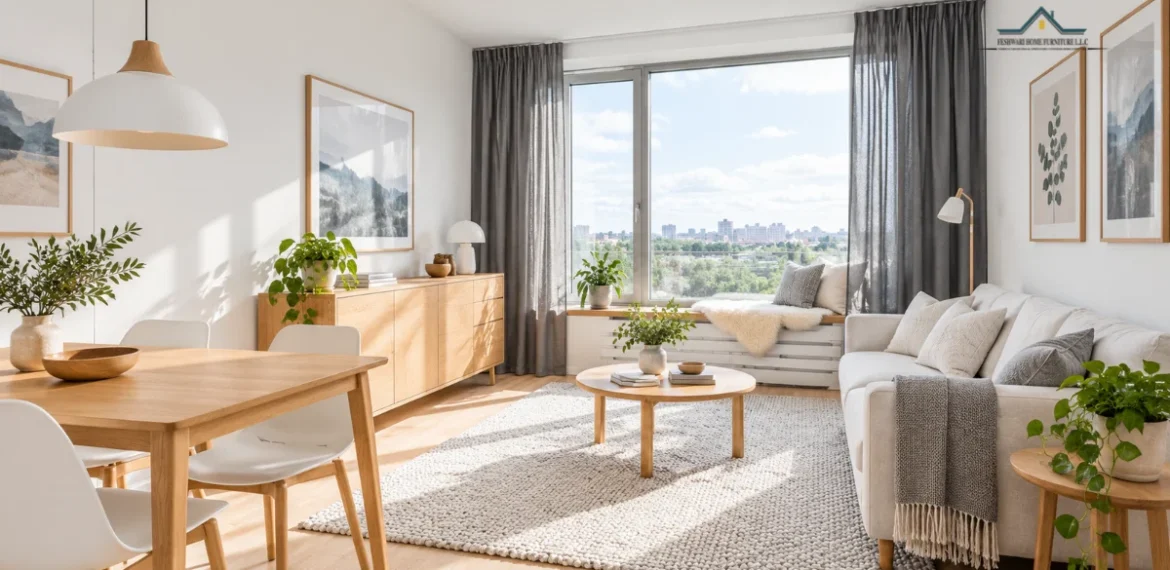
To furnish a small apartment in Dubai without making it feel crowded, start with the available floor space and the way each room will be used. A large sofa might fit against the wall but leave little room for a coffee table or comfortable movement.
For a studio apartment, compact furniture that serves multiple purposes can help separate living, dining, and sleeping areas. In a one-bedroom apartment, the focus can shift toward creating a balanced living room with coordinated furniture, colours, and materials. This guide shows how to bring these elements together in a practical, well-designed space.
Plan Your Apartment Layout Before Buying Furniture
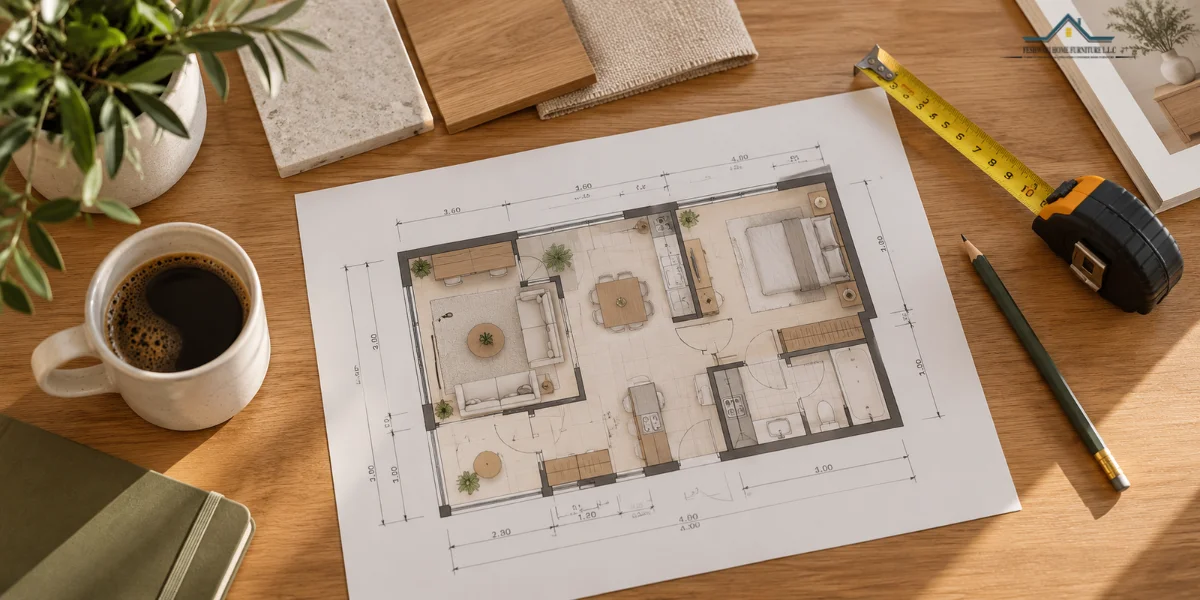
Measure the length and width of your room and mark the doors, windows, and cabinets on a simple sketch. Then measure the space available for each piece of furniture, including the area needed to walk around it.
For example, a 90 cm deep sofa, a 60 cm coffee table, and a 40 cm gap between them take up 190 cm. If this leaves less than 80 cm for your main walkway, replace the coffee table with a narrower model or use a side table instead. Before buying, mark the furniture dimensions on the floor with masking tape. Open nearby doors and walk through the room. This shows whether your chosen layout works before you spend money.
Style Your Small Apartment
Start with a consistent colour palette rather than decorating each corner separately. For a warm, modern apartment, combine off-white walls, light oak furniture, and muted olive or terracotta accents. Repeat these tones in cushions, artwork, and smaller accessories. This creates continuity between the living and dining areas without making everything look identical.
Use one large rug to visually connect the seating area, with at least the front legs of the sofa resting on it. A rug that’s too small makes the furniture appear disconnected. If your living and dining spaces share one room, distinguish them through lighting and furniture placement rather than adding bulky partitions.
Introduce contrast through textures instead of too many colours. A linen sofa, wooden coffee table, and a few ceramic accessories create more depth than filling the room with decorative objects. If standard furniture sizes disrupt the layout, custom furniture in Dubai can help you match the dimensions, materials, and finishes to your space. Keep the largest surfaces visually calm and reserve stronger colours or patterns for a few carefully chosen pieces.
Choose Furniture That Fits a Small Space
Living Room
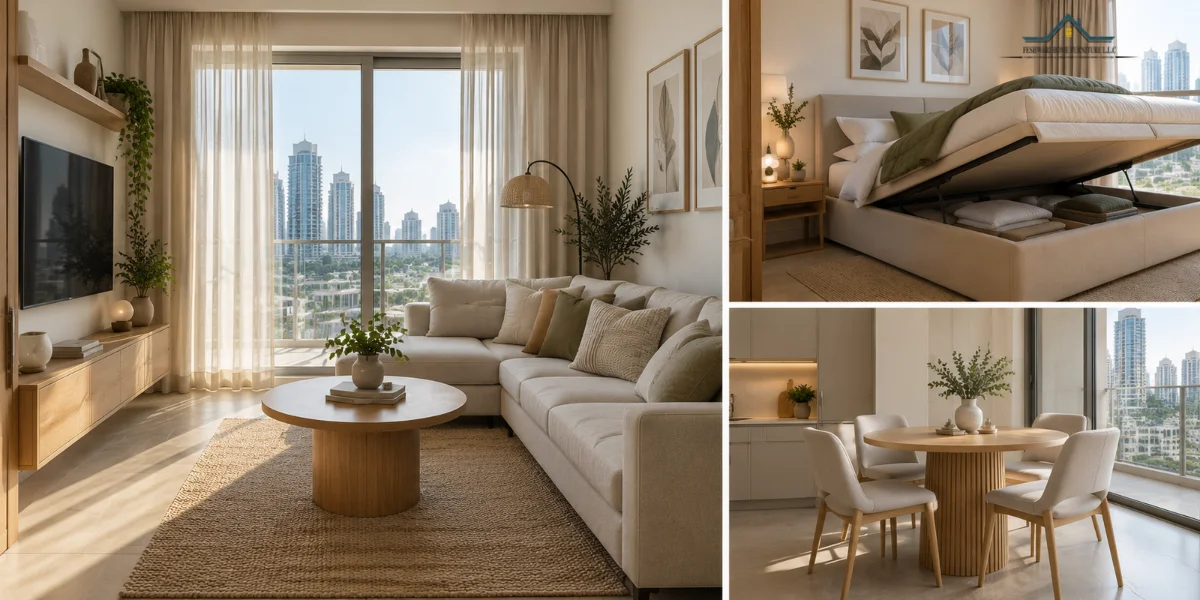
- Choose a sofa with slim arms for more seating space.
- Use round nesting tables instead of bulky coffee tables.
- Keep the centre of the room open.
Bedroom
- Choose a lift-up storage bed to save space.
- Replace bedside cabinets with wall-mounted shelves.
- Avoid furniture that blocks wardrobes or walkways.
Dining Area
- Choose a round table with a central pedestal.
- Use a wall-mounted folding table in narrow spaces.
- Pick compact chairs that tuck under the table.
Make Rooms Feel Bigger
Mount curtain rails close to the ceiling and extend them 15–25 cm beyond each side of the window, where space allows. This makes the windows appear taller and lets curtains sit away from the glass when open.
For Dubai apartments with strong sunlight, combine sheer curtains with blackout panels. Sheers soften daylight, while blackout curtains reduce glare and provide privacy at night. Avoid relying on a single ceiling light. Add a slim floor lamp or wall lighting to brighten darker corners without taking up valuable furniture space.
Curtain Styling
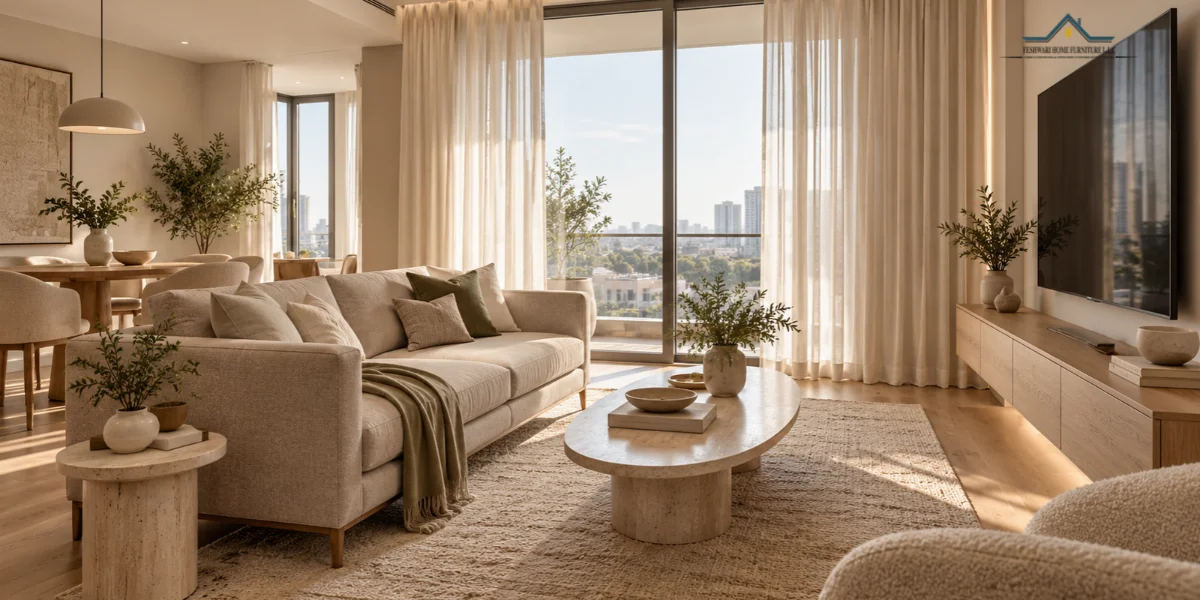
Choose ceiling-mounted wave curtains in warm ivory or oatmeal, with a lightweight linen-look fabric that falls in even folds to the floor. For sun-facing windows in Dubai, add a separate taupe blackout layer behind the sheers. Extend the curtain track beyond the window edges so the fabric can gather away from the glass when open. If your windows have unusual dimensions, Custom Curtain Dubai services can help you achieve the right fit and fabric coverage. Avoid heavy patterns and contrasting curtain borders; a continuous neutral fabric creates a cleaner appearance and visually increases the height of the room.
Sofa Design
warm greige sofa with narrow arms, a streamlined backrest, and slightly raised legs gives a small living room a contemporary look without excessive visual weight. Choose a tightly woven, easy-clean fabric rather than bulky velvet or heavily tufted upholstery. Position the sofa to maintain a clear route between the entrance and windows. Use two or three cushions in ivory and muted olive, combining smooth and textured fabrics. If the room is narrow, a straight sofa generally offers more flexible placement than a deep sectional.
Table Styling
Pair the sofa with an oval coffee table in matte light oak or a soft travertine finish. Rounded edges make movement around the seating area easier, while a slim tabletop keeps the design visually light. For the dining area, choose a compact round pedestal table with matching oak or warm beige finishes. Avoid combining several different wood tones or glossy stone surfaces. Repeating the same material across the coffee table, dining table, and smaller furniture creates a more cohesive interior.
TV Wall Design
Mount the television at a comfortable seated viewing height, with a shallow floating console beneath it in natural oak or matte warm beige. Custom TV Units Dubai services can help you create a console that fits the available wall space without overcrowding the room. Keep the wall behind the screen in a soft off-white finish rather than adding dark marble panels or busy decorative textures. Conceal cables inside the console while allowing ventilation for electronic devices. If the television shares a wall with a window, position it to reduce reflections on the screen. This creates a defined TV area without turning the entire wall into a bulky feature.
Find Your Interior Style
A well-designed apartment starts with furniture that fits its layout and colours that work with the existing space. The size of your room, flooring, and natural light all influence which combinations will look and function best. Enter your apartment details below to receive tailored suggestions for furniture, placement, colours, curtains, and flooring.
Find Your Interior Style
Get furniture and styling ideas for your space.
Two Small Living Room Design Ideas
1. Warm Modern Living Room
- Walls: Warm off-white, with a soft taupe accent behind the TV.
- TV Wall: A low walnut console with concealed storage and no additional wall shelves.
- Sofa Wall: One large abstract artwork in beige, olive, and brown.
- Decor: A ceramic vase, a small stack of books, and a textured cream rug.
- Finishing: A slim black floor lamp beside the sofa for contrast.
2. Light Contemporary Living Room
- Walls: Soft greige throughout, without a separate accent wall.
- Layout: Position the sofa along a solid side wall and the TV perpendicular to the main window where possible.
- Furniture Finishes: Light oak, brushed metal, and ivory upholstery.
- Decor: One oversized framed print, a sculptural table lamp, and muted terracotta cushions.
- Finishing: Keep the window wall free of tall furniture to preserve daylight and an open view.
Final Thoughts
One detail that can completely change how a small apartment feels is the view from its entrance. If the first thing you see is the back of a large sofa or a tall cabinet, the room can feel smaller before you even walk in. Position taller storage along side walls and keep lower furniture in the main sightline. This creates a clearer view across the apartment and makes the space feel deeper without removing useful furniture.
Frequently Asked Questions
Can wallpaper hide uneven or damaged walls?
Some textured wallpapers can make minor surface imperfections less noticeable, but they cannot correct cracks, loose plaster, or significant unevenness. Repair and smooth the wall before installation to prevent visible bumps and adhesion problems.
Why do wallpaper seams become visible after installation?
Visible seams can result from poor edge alignment, unsuitable adhesive, or incorrect installation techniques. Wall preparation and lighting can also make joints more noticeable. Check the manufacturer's installation instructions and inspect the first few strips before continuing.
Do wallpaper rolls need to have the same batch number?
Yes, when the manufacturer provides batch or dye-lot numbers, rolls used on the same wall should generally match. Different batches may have slight colour variations that become noticeable after installation. Check every roll's label before opening or cutting it.
How much extra wallpaper should I order for a patterned design?
Patterned wallpaper often requires additional material to align the design between strips. The amount depends on wall dimensions, roll width, pattern repeat, and match type. Calculate the required strips using the manufacturer's specifications before ordering, rather than relying on wall area alone.
Can wallpaper be installed over damp walls?
No. Damp walls can weaken wallpaper adhesive, cause peeling, and conceal moisture problems. Identify and repair the source of moisture, allow the wall to dry properly, and confirm the surface is suitable before installation. Wallpaper should never be used to cover active dampness or mould.
Also Read : Wallpaper Mistakes That Make a Room Look Worse