
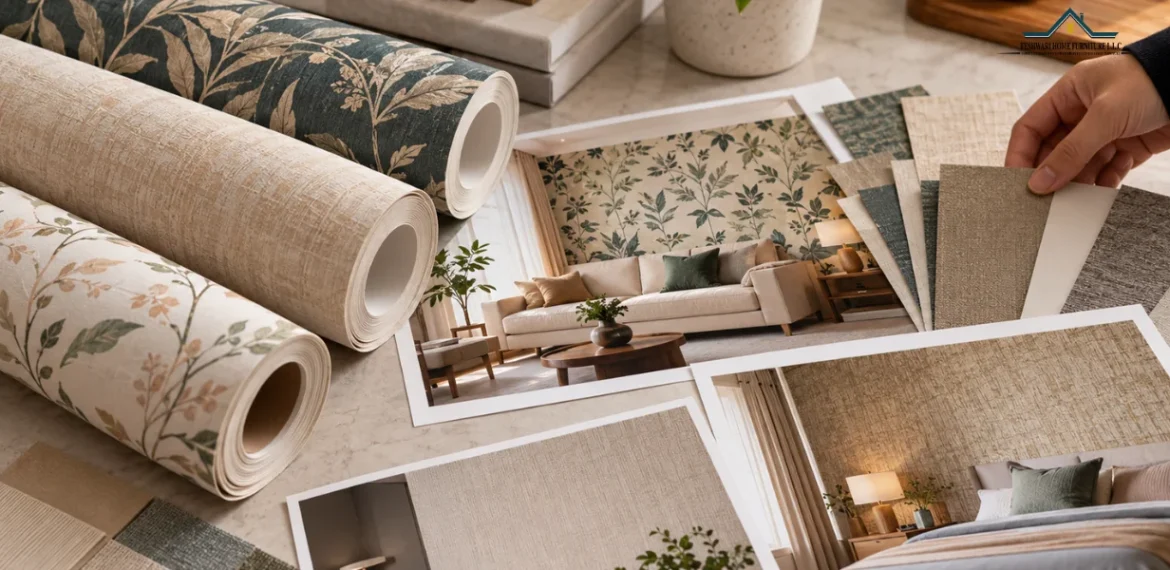
wallpaper design can look perfect in a small sample but completely different once it covers an entire wall. A subtle pattern may become overwhelming when repeated across a large surface, while a beautiful colour can appear too dark or dull under your room’s lighting.
Most wallpaper mistakes happen when the design is chosen without considering the room itself. Wall size, furniture, natural light, and pattern placement all affect the final result. Even an expensive wallpaper can make a space feel cluttered or unbalanced if these details are overlooked. Before making your choice, it helps to understand which mistakes actually affect a room’s appearance and how to avoid them. The following sections explain what can go wrong and what to check before installation.
Choosing the Wrong Wallpaper Pattern Size
wallpaper pattern may look attractive in a sample but feel too busy or incomplete on a full wall. Small, high-contrast patterns can overwhelm a room, while large designs may lose their impact if the main details disappear behind furniture.
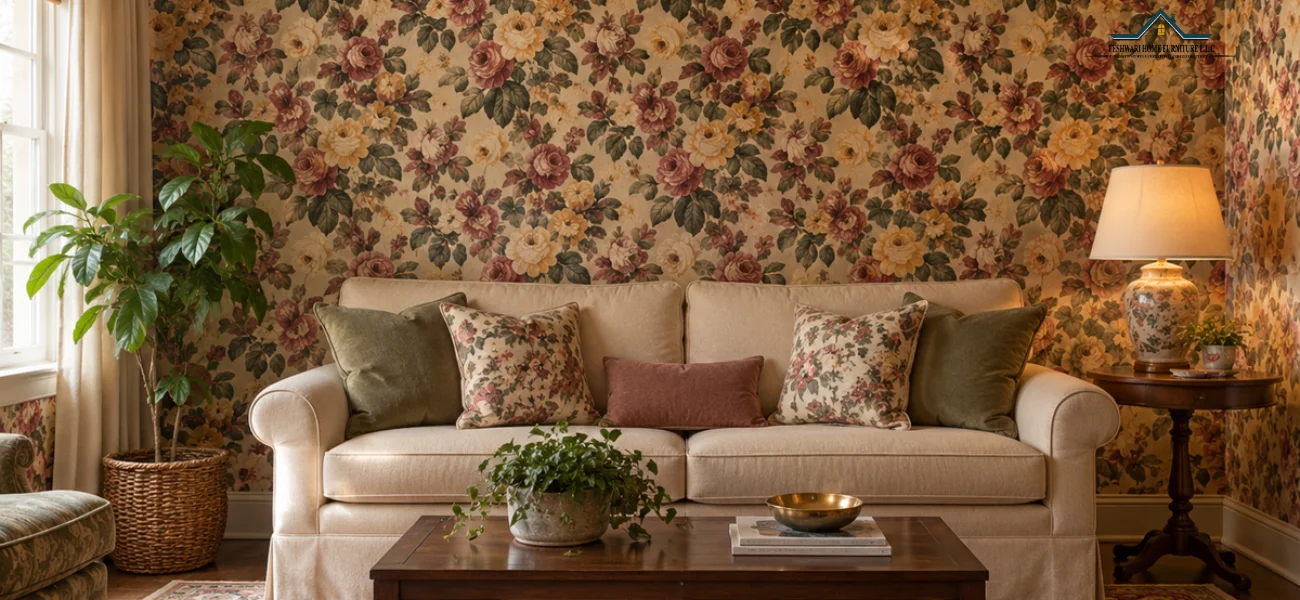
Before buying, check the pattern’s actual size, repeat spacing, and visible wall area. For example, if you’re choosing floral wallpaper behind a sofa, make sure the main flowers won’t be hidden by the backrest. Practical tip: Request a large sample or full-scale preview and view it from across the room. This helps you judge whether the pattern looks balanced in your space.
Using Large Wallpaper Patterns in Small Rooms
- Choose open patterns: Look for designs with enough space between motifs to avoid visual clutter.
- Keep contrasts soft: Use colours with gentle contrasts to prevent oversized patterns from overwhelming the room.
- Consider furniture placement: Make sure the main details won’t disappear behind sofas, beds, or cabinets.
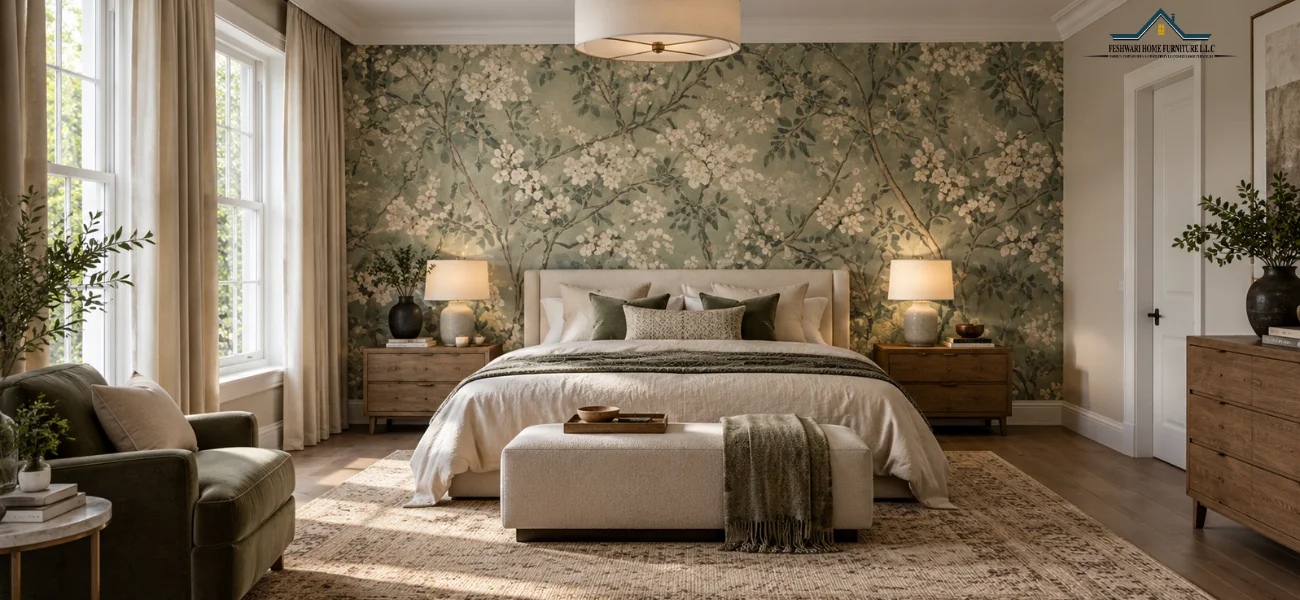
- Create a focal point: Use a large botanical pattern that remains visible above the headboard.
Luxury Wallpaper Dubai Matching Furniture
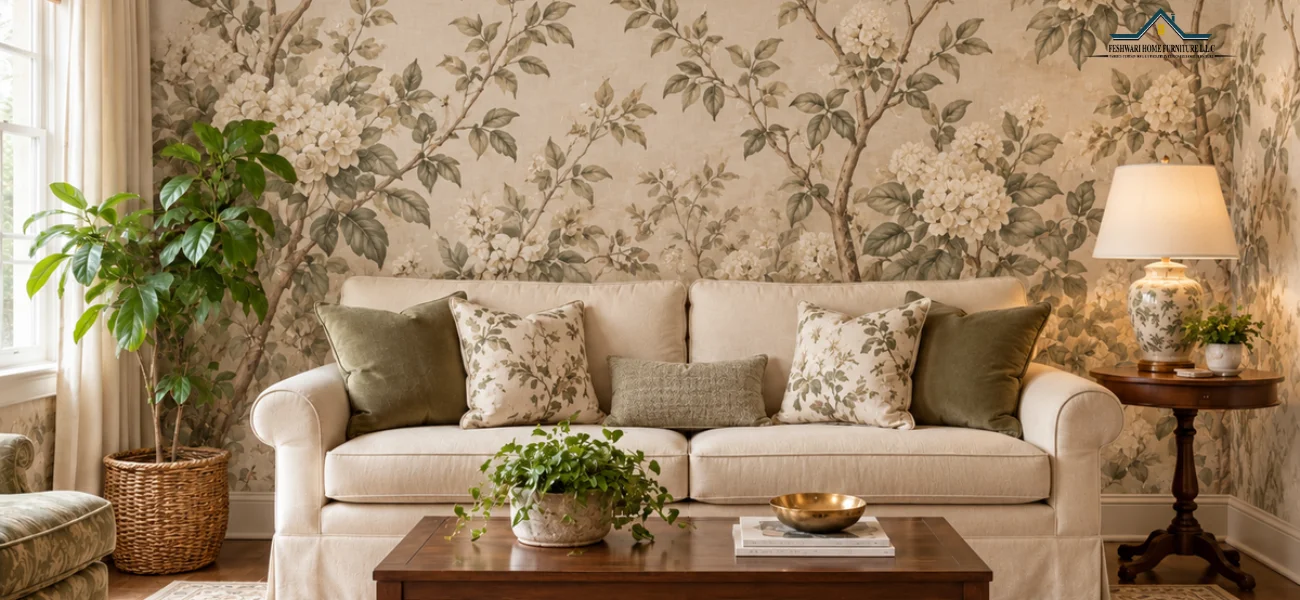
Wallpaper can make a room feel cluttered when its colours and details compete with the furniture. For example, combining a patterned sofa, colourful rug, and bold wallpaper can leave the room without a clear focal point. If your furniture already has strong colours or decorative details, choose wallpaper with a simpler design. For rooms with neutral furniture, a bolder wallpaper can add character without overwhelming the space.
Practical tip: Place the wallpaper sample against the wall near your sofa. Step back and check whether its colours complement the furniture and whether both patterns compete for attention. Repeat the check in daylight and evening lighting before deciding.
| What to Do | Practical Example |
|---|---|
|
01
Choose One Dominant Feature
|
Pair bold wallpaper with a plain sofa and simple curtains. |
|
02
Repeat One Colour
|
Match a cushion or accessory to a colour in the wallpaper. |
|
03
Limit Wall Decorations
|
Keep large artwork away from the wallpaper's main pattern. |
Putting Wallpaper on the Wrong Wall
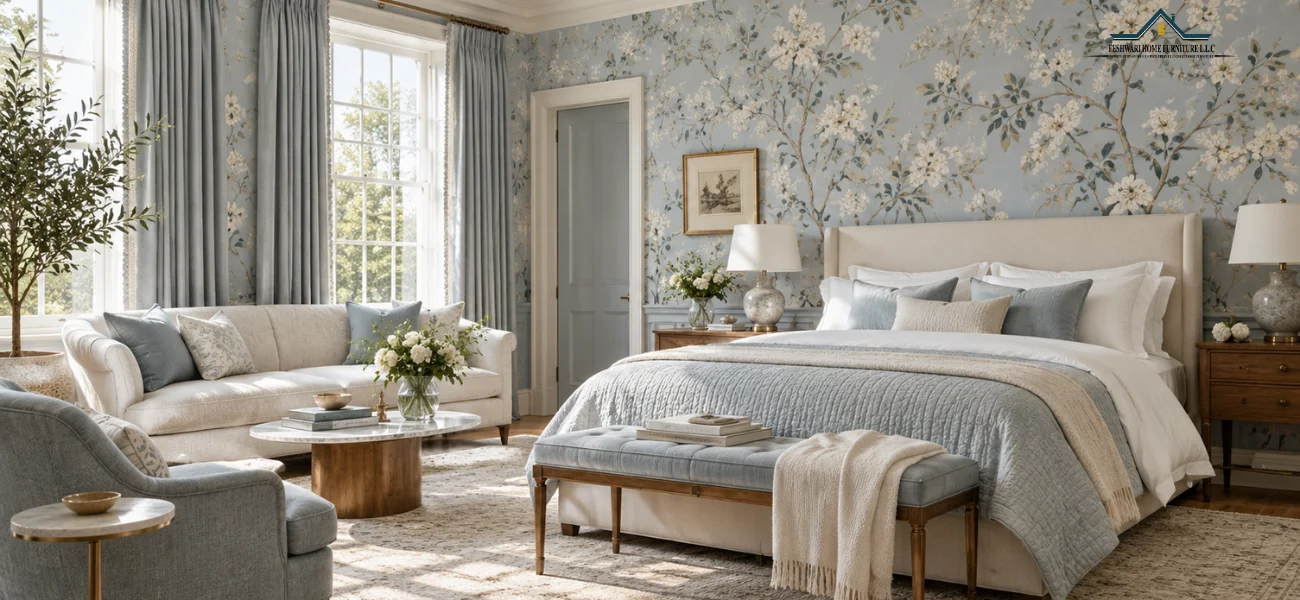
Don’t automatically choose the largest wall. A wall interrupted by doors or windows can break up the wallpaper design, while bold patterns behind a TV may distract from the screen. When choosing Custom wallpaper in Dubai, photograph each wall from your main seating position before installation. Choose a surface where the design remains clearly visible and doesn’t compete with the room’s main focal point.
Feature Wall vs Full-Room Wallpaper
Use bold, high-contrast wallpaper on one feature wall to avoid overwhelming the room. For full-room coverage, subtle patterns or low-contrast textures usually create a more balanced finish. Practical tip: Place samples on two adjoining walls. If the repeated pattern feels too busy around the corner, limit it to one wall.
The Impact of Lighting on Designer Wallpaper Colours
- Warm lighting: Can make beige and cream wallpaper appear more yellow.
- Cool lighting: May give grey and neutral colours a colder appearance.
- Direct sunlight: Can create strong reflections on glossy wallpaper and highlight wall imperfections.
- Test before buying: Check a wallpaper sample in daylight and evening lighting.
Conclusion
The best wallpaper isn’t necessarily the most expensive or eye-catching design. It’s the one that works with your room’s lighting, furniture, and proportions. Before buying, test a sample on the intended wall and check how it looks from different angles. This simple step can prevent costly wallpaper mistakes and help you achieve a balanced, lasting result.
Frequently Asked Questions
Can wallpaper hide uneven or damaged walls?
Some textured wallpapers can make minor surface imperfections less noticeable, but they cannot correct cracks, loose plaster, or significant unevenness. Repair and smooth the wall before installation to prevent visible bumps and adhesion problems.
Why do wallpaper seams become visible after installation?
Visible seams can result from poor edge alignment, unsuitable adhesive, or incorrect installation techniques. Wall preparation and lighting can also make joints more noticeable. Check the manufacturer's installation instructions and inspect the first few strips before continuing.
Do wallpaper rolls need to have the same batch number?
Yes, when the manufacturer provides batch or dye-lot numbers, rolls used on the same wall should generally match. Different batches may have slight colour variations that become noticeable after installation. Check every roll's label before opening or cutting it.
How much extra wallpaper should I order for a patterned design?
Patterned wallpaper often requires additional material to align the design between strips. The amount depends on wall dimensions, roll width, pattern repeat, and match type. Calculate the required strips using the manufacturer's specifications before ordering, rather than relying on wall area alone.
Can wallpaper be installed over damp walls?
No. Damp walls can weaken wallpaper adhesive, cause peeling, and conceal moisture problems. Identify and repair the source of moisture, allow the wall to dry properly, and confirm the surface is suitable before installation. Wallpaper should never be used to cover active dampness or mould.