
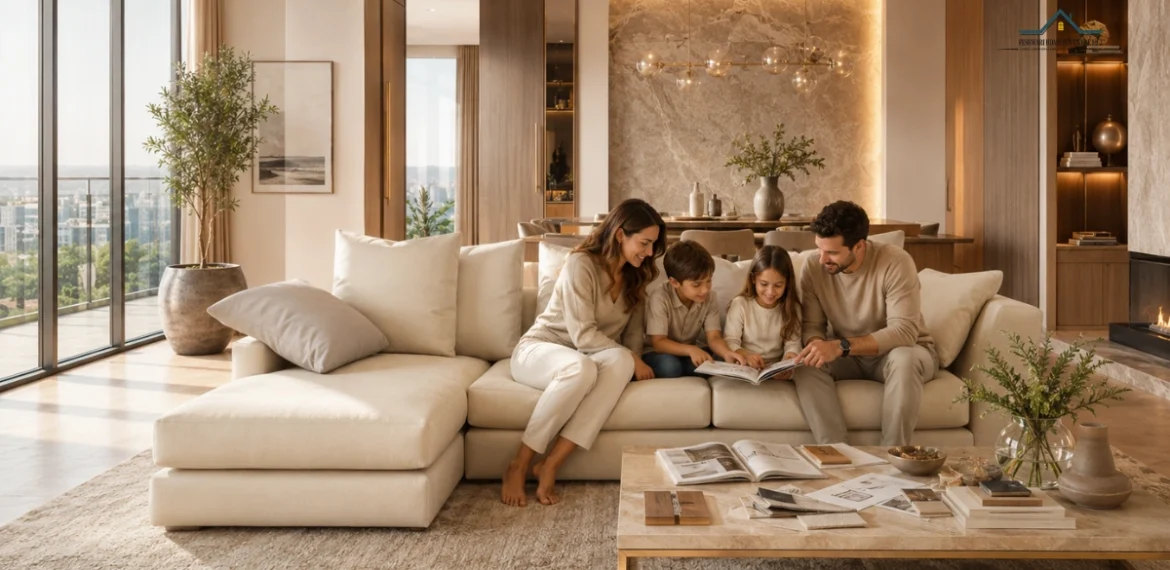
How to Choose Furniture for a New Home is not a question of which pieces look impressive in a showroom. A sofa that is only slightly too deep can reduce the usable space in a living room, a dining table with insufficient clearance can make every meal uncomfortable, and a bed positioned without checking wardrobe doors can make a bedroom difficult to use.
These are not minor styling issues. They are planning mistakes that become expensive once the furniture has been delivered. Returning a large sofa, changing a dining layout or replacing a bed because it blocks movement is far more difficult than checking the space before making a purchase.
How Furniture for a New Home Will Be Used
Before comparing furniture styles, prepare a short brief for every room. The brief should explain who will use the room, what activities will take place there, how often the room will be used and which practical requirements cannot be ignored. A living room used by a family every evening needs different furniture from a formal sitting room used only when guests visit. The first may require deeper seating, durable upholstery and additional storage. The second may need more individual seating and clearer space between each piece.
The same principle applies to bedrooms and dining areas. A bedroom shared by two people may need more wardrobe capacity and better movement around the bed. A dining room used for regular family meals may require a durable surface and comfortable chair spacing rather than a table chosen only for its appearance.
Once the purpose of each room is clear, identify the main furniture piece that will control the rest of the layout. This is usually the sofa in the living room, the bed in the bedroom and the dining table in the dining area. The next stage is to measure these pieces against the room and the routes used to bring them inside.
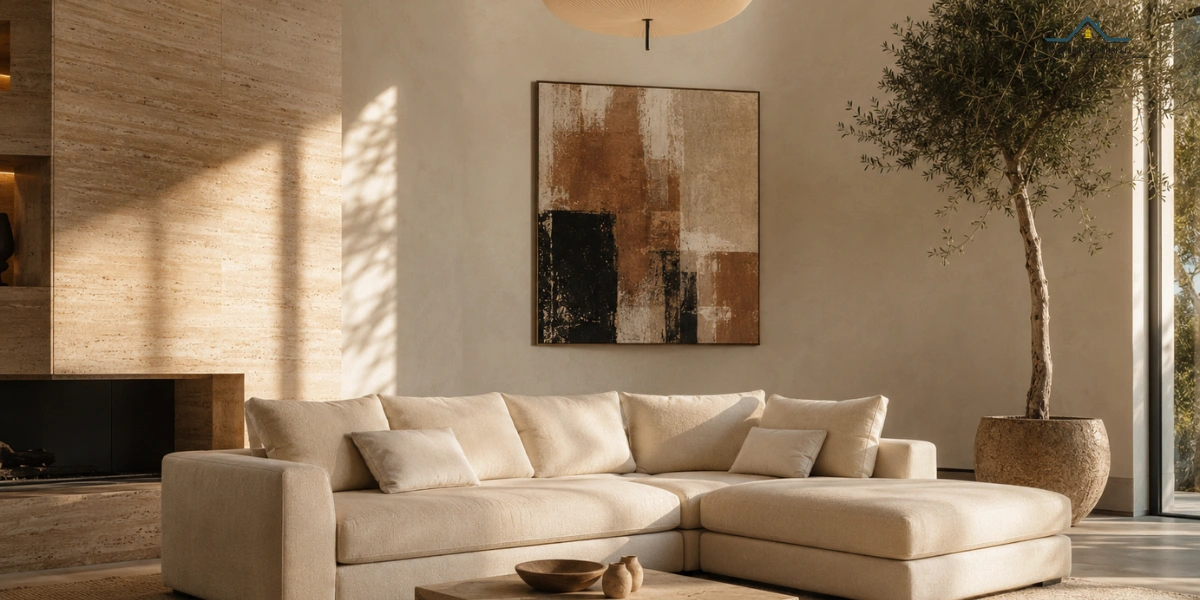
1.The Correct Order for Furnishing a New Home
A new home does not need to
be furnished randomly or completed in one purchase. Start by deciding what each room needs to do. Then measure the room and the delivery route.After that, choose the main furniture piece, such as the sofa, bed or dining table. Supporting furniture should be selected around these main pieces.Quality, material and decorative details should be considered after the practical layout is clear.This order reduces the risk of buying furniture that does not fit, does not work with the room or becomes difficult to maintain.
2.Measure the Usable Space
The total size of a room does not show how much space is available for furniture. Doors, windows, air conditioning units, columns and built in storage reduce the usable area. Measure the uninterrupted wall length instead of measuring only from one corner to another. A four metre wall may provide only 1.3 metres of usable space if a door and a large window occupy part of it. The delivery route must also be measured. Check the entrance door, corridors, staircases and lift before ordering a large sofa, bed or dining table. Leave approximately 75 to 90 centimetres for the main walking routes where possible. This is more useful than placing furniture tightly against walls simply because it fits.
3.Suitable Lighting for Different Furniture Types
Lighting should be selected according to the material, colour and surface of the furniture. Dark wood, brown leather and brass usually look warmer and richer under soft lighting between 2700K and 3000K. White upholstery, marble and glass furniture work better with neutral lighting between 3000K and 3500K, because very warm light can make them appear yellow. Grey, blue and black furniture may need slightly cooler neutral light so their original tones do not look dull. Glossy surfaces and polished marble should be illuminated with diffused light rather than a strong direct spotlight, which can create unwanted reflections. Natural sunlight should also be filtered when it falls directly on fabric or leather, as prolonged exposure can cause fading and surface damage. For a balanced room, combine general ceiling light with focused lighting near reading chairs, side tables or work areas.
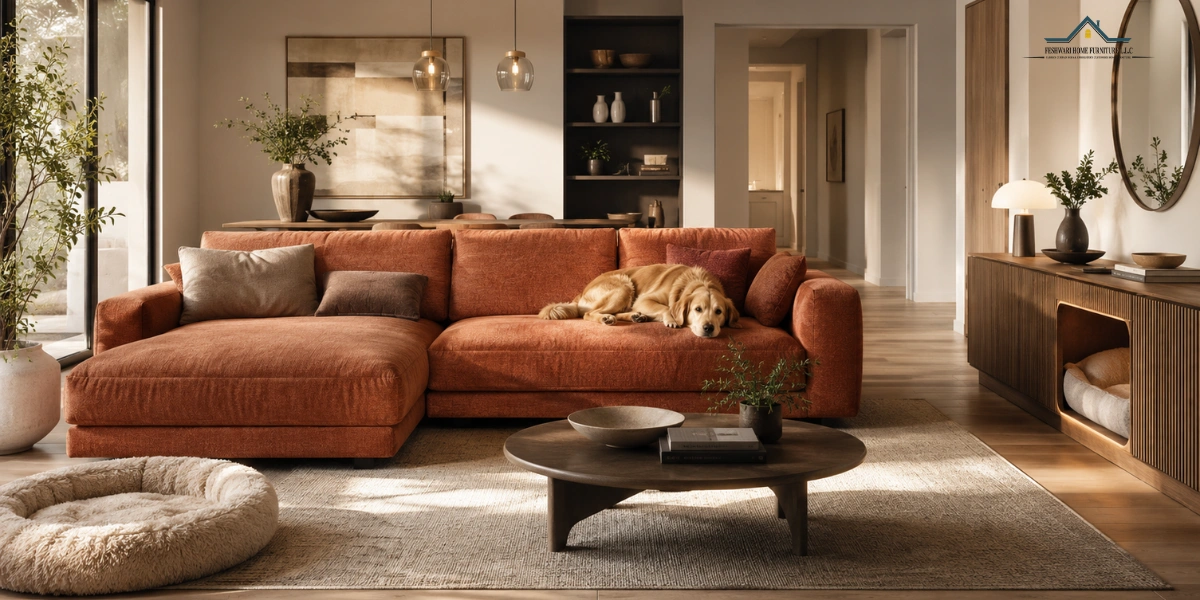
4.Furniture Choices for Different Room Shapes
Furniture should match the geometry of the room rather than forcing every space into the same layout. Square rooms usually work well with a balanced arrangement, such as a straight sofa with two chairs and a round or square coffee table. Rectangular rooms benefit from linear furniture and clearly defined zones, while long, narrow rooms need sofas with controlled depth, slim tables and an uninterrupted walking route. In an L-shaped room, separate furniture zones can define the living and dining areas more effectively than one oversized sectional. Open-plan spaces often benefit from using the back of a sofa as a visual boundary between areas. For irregular rooms with angled walls, rounded tables, modular seating and custom storage can use the available space more efficiently than large rectangular furniture. When standard pieces do not fit the room properly, custom furniture in Dubai offers a practical way to create furniture that suits the space, measurements and daily needs of the household.
Find Your Ideal Sofa
Choose the profile that is closest to your room.
Compact Straight Sofa
Use one slim accent chair and a small round coffee table. Keep at least 75 cm clear for movement.
Three-Seat Straight Sofa
Place the sofa along the longer wall and keep the centre of the room open for circulation.
Slim-Depth Sofa
Avoid deep sectionals. Keep the sofa on one side and leave a continuous walking route through the room.
Modular L-Shaped Sofa
Use the return to separate the living area from the dining or circulation zone without adding a wall.
Sofa with Two Accent Chairs
Place the back of the sofa toward the adjacent area to create a clear visual boundary in the open plan.
Curved or Custom Modular Sofa
Rounded furniture works better around angled walls. Custom furniture in Dubai can create a more accurate fit for unusual rooms.
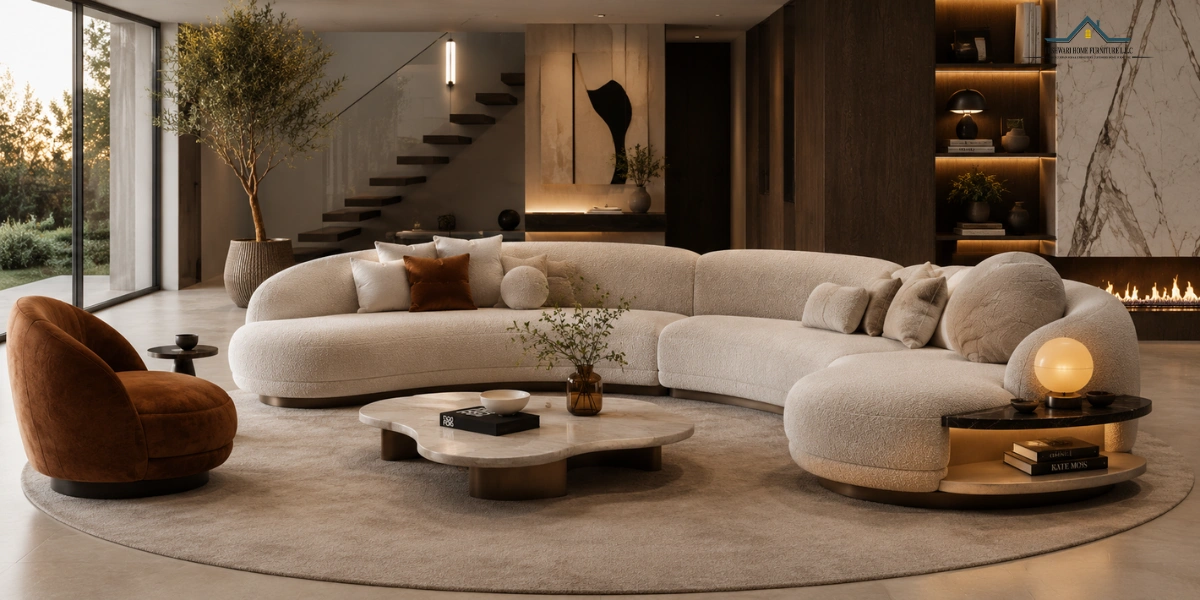
5.Plan for the Household, Not the Empty Room
Furniture should be selected according to the people who will use it. A home with children or pets needs stain resistant upholstery, removable covers and safer edges, while a home used for frequent entertaining needs more flexible seating. Work from home, future storage needs and possible changes in the household should also be considered before buying fixed size furniture.
6.Build Storage Into the Layout
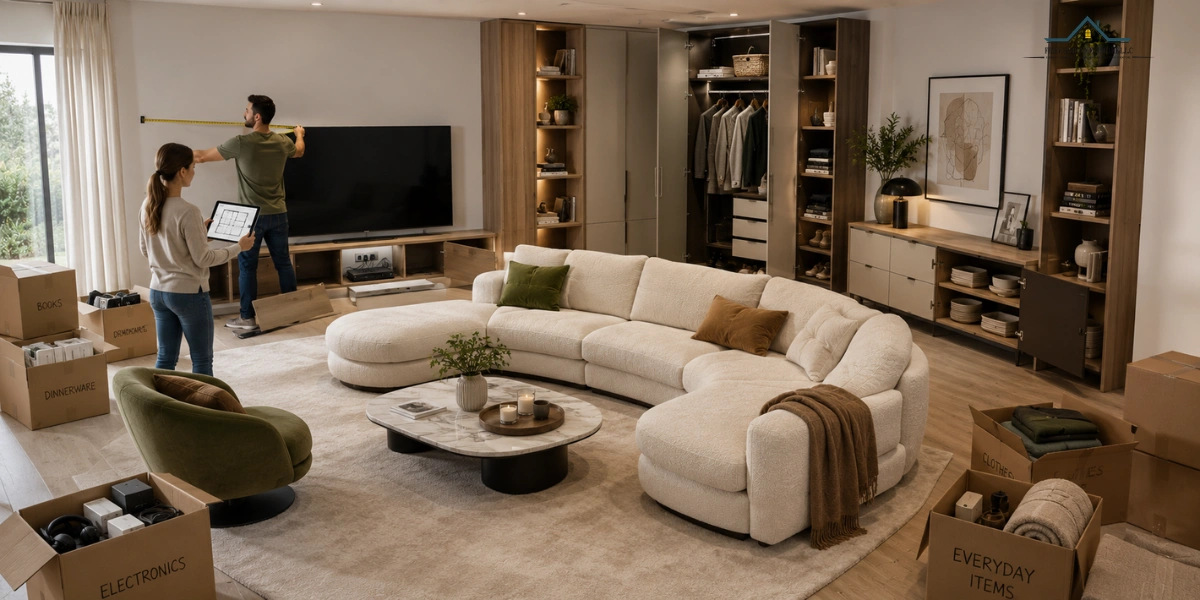
Storage should be planned before decorative furniture is selected. Decide what needs to be stored in each room, including electronics, dinnerware, clothing, books and everyday items. A wardrobe usually needs around 60 to 65 centimetres of depth, while TV units and sideboards require enough space for equipment, cables and ventilation. Vertical storage can increase capacity without taking more floor space.
Final Buying Checklist
Before placing an order, confirm that the furniture fits the room, the delivery route and the intended layout. Check the total dimensions, usable seating depth, walking clearance, storage capacity, material composition, surface finish and maintenance requirements. Confirm that doors, drawers and wardrobes can open without obstruction. Review the warranty, installation conditions, delivery cost and expected arrival condition. If standard furniture leaves awkward gaps or insufficient storage, compare a custom option before ordering. This final check reduces the risk of receiving furniture that looks suitable online but does not work in the home.
Frequently Asked Questions
How do I choose furniture for a new home?
What furniture works best in a small living room?
How does room shape affect furniture placement?
When should I choose custom furniture in Dubai?
What should I check before buying furniture?
Also Read: Furniture Size Guide for Dubai Apartments: Room-by-Room Measurements