

console table can look perfect in a product photo and still be wrong for your home. The problem is usually not the colour or style. It is often too deep for the hallway, too tall behind the sofa or too small for the wall where it is placed.
Start with the location. In a hallway, check whether you can walk past the table comfortably without turning your body or catching bags and clothing on its corners. Behind a sofa, the console should not rise awkwardly above the backrest or extend beyond the sides. Against an empty wall, consider how the table will look with the mirror, artwork or lighting above it rather than judging it on its own. This console table buying guide explains what to check before ordering, including size, storage, materials and construction. It will also help you recognise features that look impressive in photos but add little value in daily use.
Choosing the Right Type of Console Table
The best type of console table depends on what you expect it to do. If you need a convenient place for keys, wallets and other small items, choose a model with drawers. If the room already feels busy, an open design with slim legs will take up less visual space. A console with cabinets offers more storage, but its heavier shape may make a narrow area feel crowded.
Material also changes how the table performs. Wood is generally easier to coordinate with existing furniture and works well for everyday use. Stone creates a stronger visual feature but adds weight and requires a stable base. Glass keeps more of the floor visible, although fingerprints and dust show quickly. Metal is useful for slim frames, but the quality of its joints and finish matters more than its appearance in a product photo. A ready-made console is suitable when its dimensions work comfortably in the available area. If standard models repeatedly feel too deep, too short or leave an awkward gap along the wall, a custom design may be the more sensible purchase.

Console Table Buying Guide for Different Spaces
The same console table can work well in one part of the home and feel completely wrong in another. Before comparing designs, mark the table’s expected width and depth on the floor with removable tape. This gives you a clearer sense of the space it will occupy than measurements written on a product page.
Entryways and Hallways
console near the entrance should make daily routines easier without narrowing the route into the home. Check the direction in which the front door opens, the position of light switches and whether drawers can open without blocking the walkway. Rounded corners can also be more practical in areas where people frequently pass close to the table.
If shoes, bags and unopened mail usually collect near the entrance, an open decorative console may not solve the problem.custom console table with drawers or closed storage can keep smaller items out of sight while using the available entrance space more efficiently.
| Factor | Ready-Made Console | Custom Console |
|---|---|---|
| Dimensions | Fixed sizes | Made for the available area |
| Materials and finish | Limited to existing options | Selected to match nearby furniture |
| Storage | Predetermined drawer or cabinet layout | Planned around the items you need to store |
| Delivery | Usually available sooner | Requires design and production time |
| Best suited to | Spaces that accept standard dimensions | Narrow, uneven or difficult spaces |
Living Room Walls
console placed against a living room wall becomes part of a larger arrangement. Its proportions should be considered together with the artwork, mirror or lighting above it and the furniture nearby. A small table under a large mirror can look disconnected, while a visually heavy console may compete with the sofa, TV unit or other dominant pieces in the room. Decide what will remain on the surface before buying. Lamps and decorative objects require more usable space than a console intended only for a few accessories.

Behind the Sofa
console behind the sofa can hold lamps, books or charging accessories, but it should not dominate the view from the front of the room. Its top should remain level with or below the sofa back, and its sides should not extend awkwardly beyond the sofa. Also check access to sockets and cables. A table may sit neatly behind the sofa but become inconvenient if it has to be moved every time a lamp or charger is connected.
Check the Size Before Ordering
practical console table buying guide should also cover the details that standard product dimensions may not show. Product dimensions do not always show how the console will sit against the wall. Check the complete shape of the table before ordering, including any parts that extend beyond its main frame.
- Maximum external size: Include handles, decorative edges and angled legs rather than measuring only the tabletop.
- Wall clearance: Skirting boards may prevent the rear legs from touching the wall and leave an unexpected gap behind the console.
- Opening space: Make sure drawers and cabinet doors can open without hitting nearby furniture.
- Floor contact: Check whether all legs will stand on the same surface, especially when the edge of a rug sits beneath the table.
- Delivery access: Confirm that the packaged table can pass through the entrance, lifts, corridors and internal doors.
Request the complete product dimensions if the listing only provides width, height and depth. For custom orders, share photographs of the intended location along with your measurements so details such as sockets, skirting and wall features are considered before production.
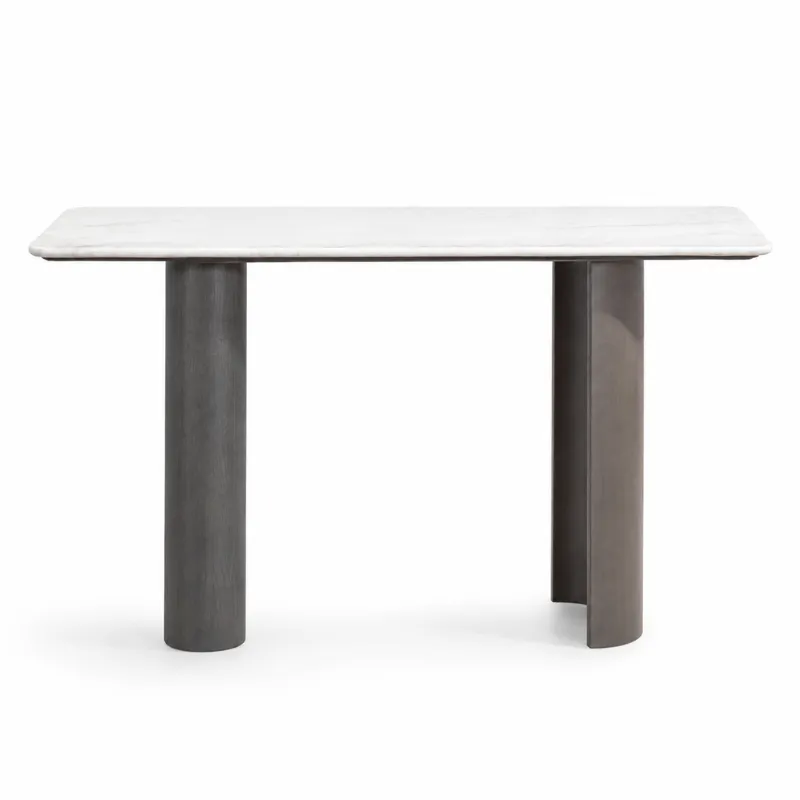
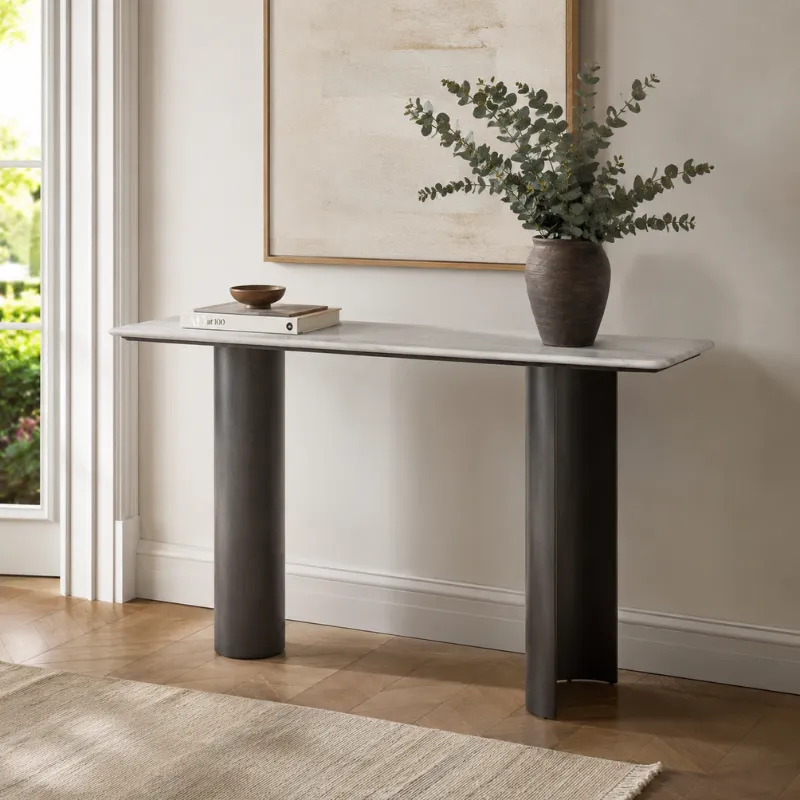
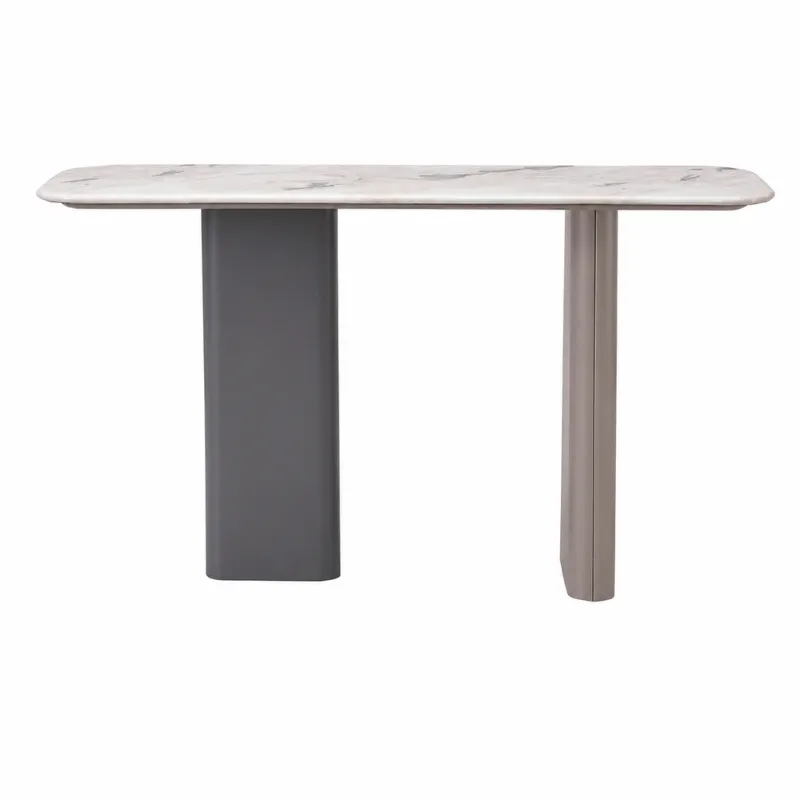
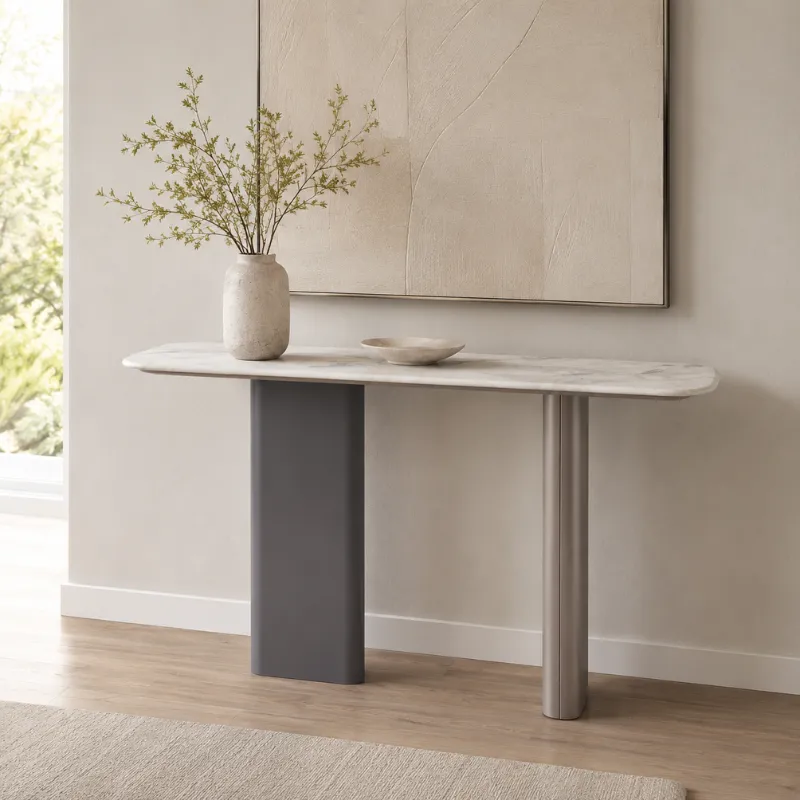
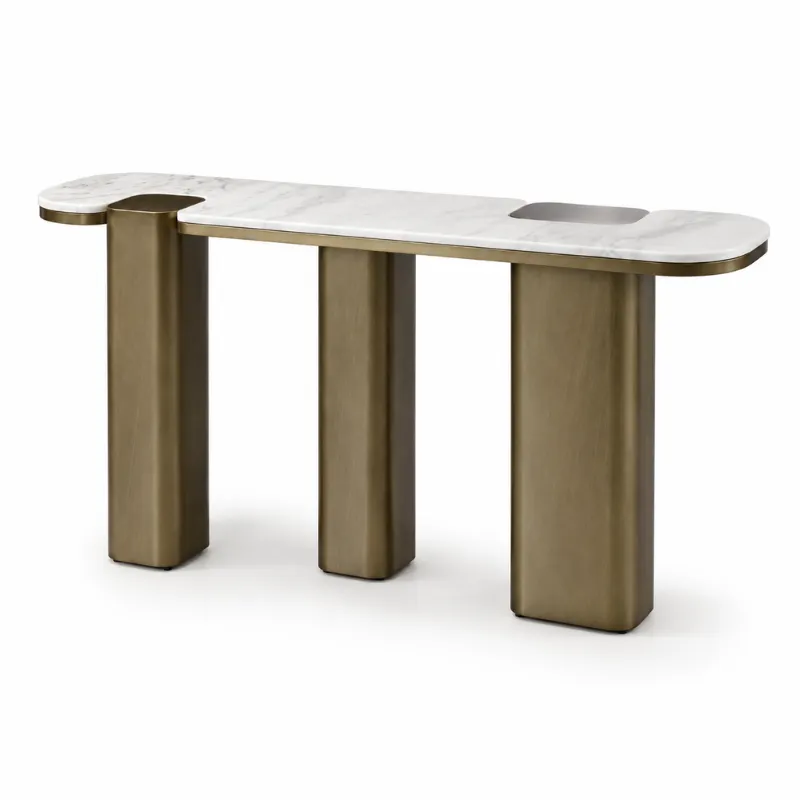
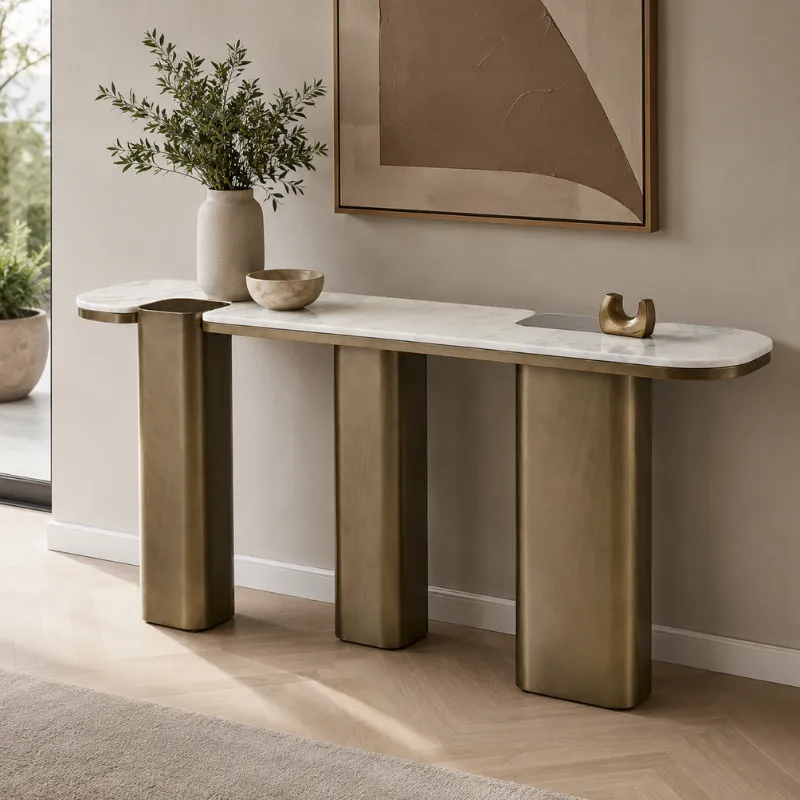
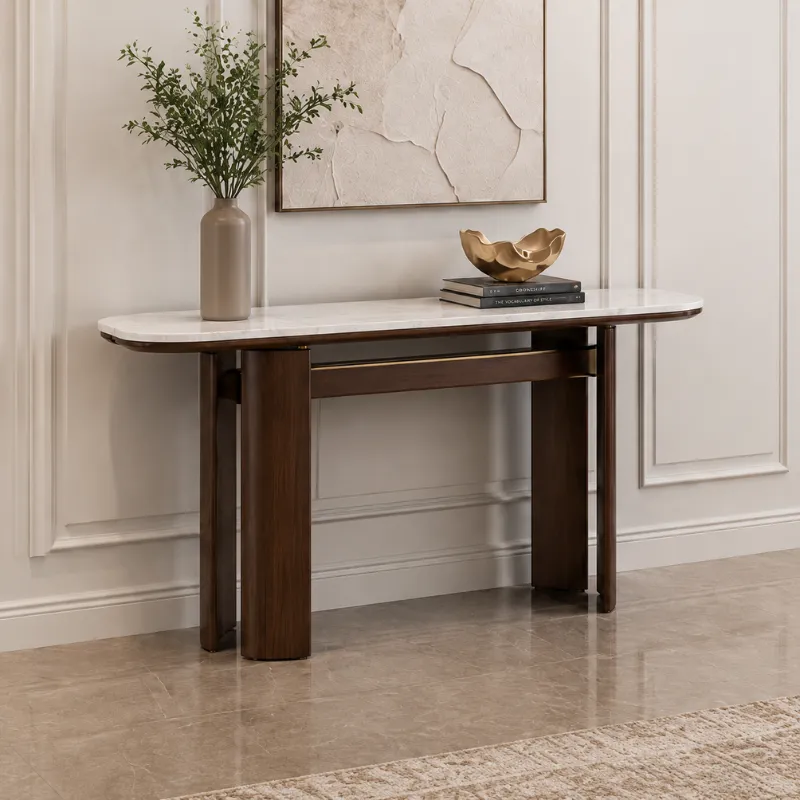
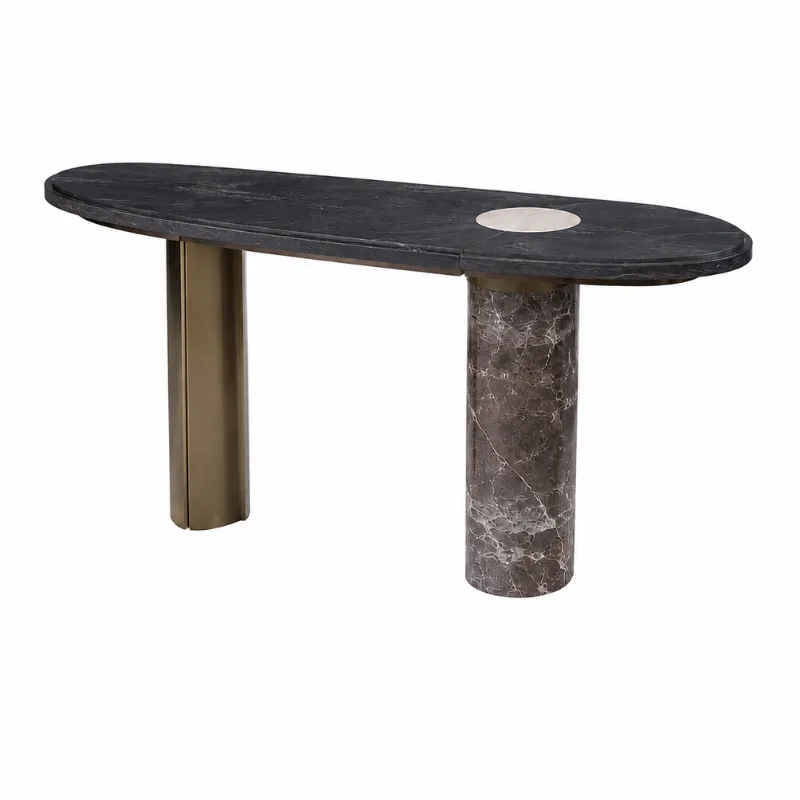
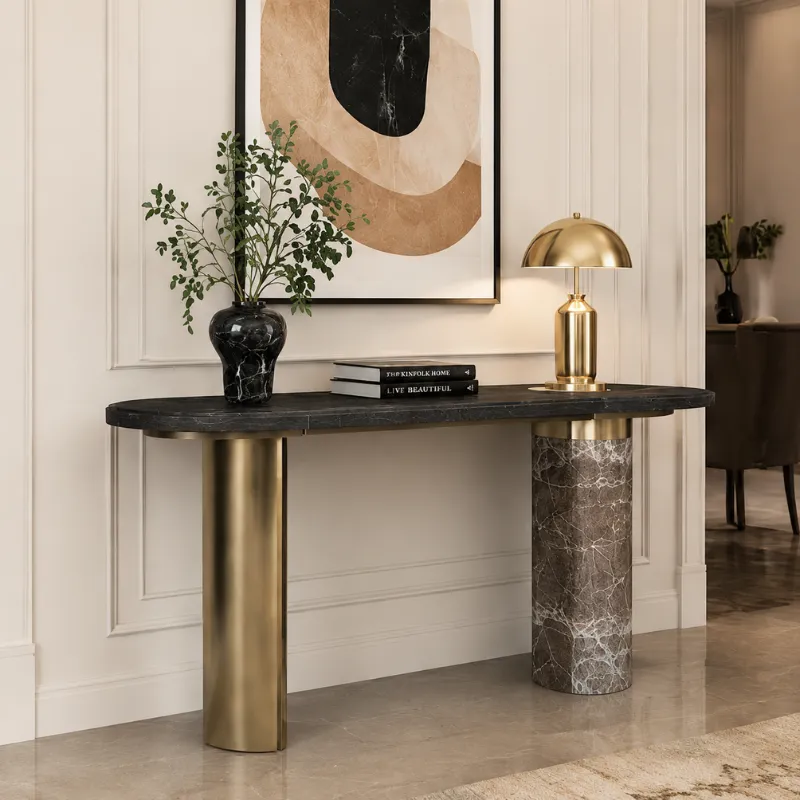
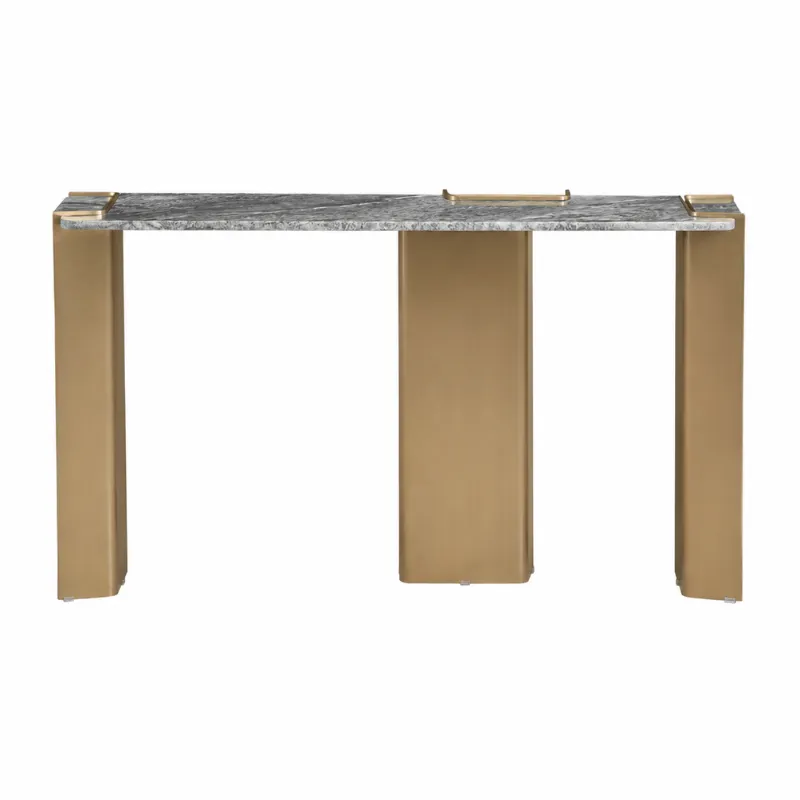
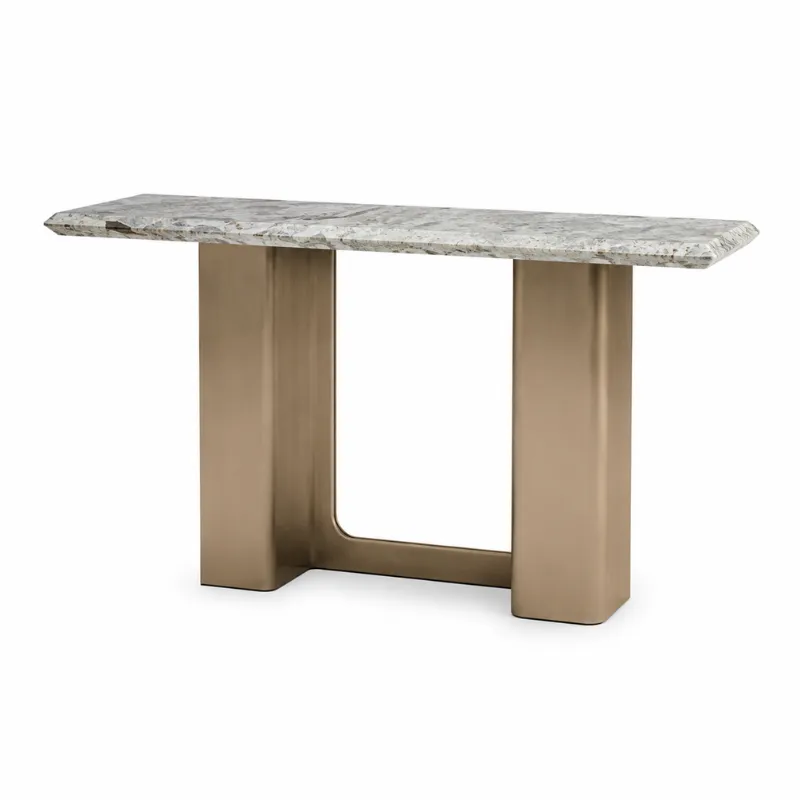
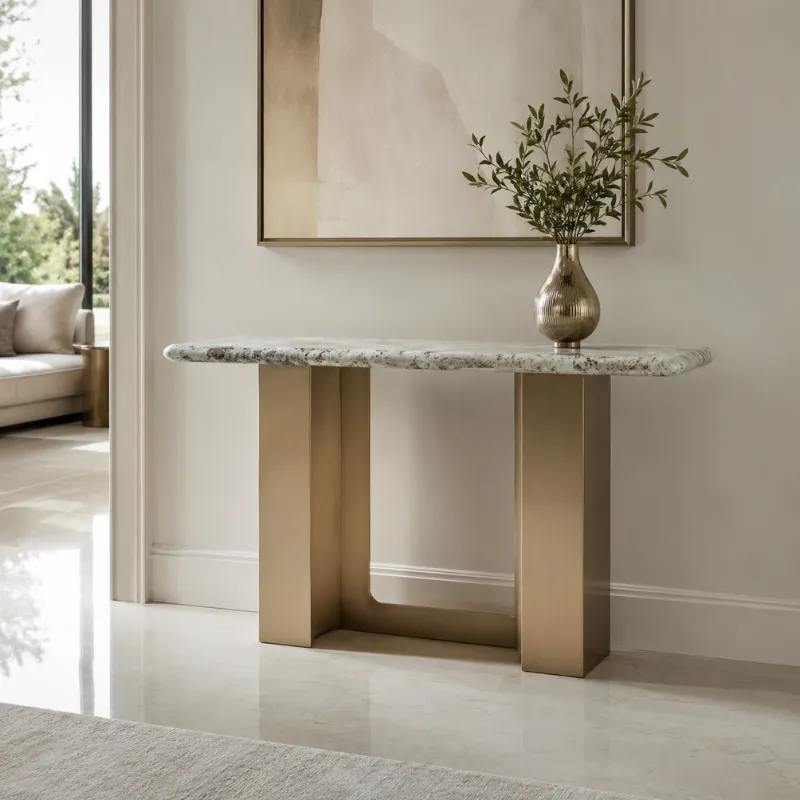
The examples below show how differences in width, storage and construction can change where and how a console table is used.




Materials and Build Quality
Do not judge a console table by its finish alone. Ask whether the body is solid wood, veneer or engineered board, and whether a stone-look top is genuine stone or a manufactured surface. The exact material affects weight, maintenance and how easily damage can be repaired. Also check the parts that product photos often hide. The legs should feel stable, joints should look clean and drawers should open without dropping or moving sideways. A well-finished surface cannot compensate for a weak frame or poor connections.
Final Thoughts
The main point of this console table buying guide is to choose a table that works naturally in its intended location. Give priority to usable dimensions, stable construction and storage you will actually use. If a ready-made model meets those conditions, there is little reason to complicate the purchase. Otherwise, a custom console gives you better control over the details that matter.
Frequently Asked Questions
Does a console table need to match the other furniture?
No. A console table can use a different material or finish, but one detail—such as the wood tone, metal colour or shape—should connect it to the surrounding furniture.
Can a console table be placed under a wall-mounted TV?
Yes, provided its width looks balanced beneath the screen and it does not block cables, sockets or ventilation. The surface should also suit any devices you plan to place on it.
Should a console table be fixed to the wall?
Wall fixing may be needed for narrow, top-heavy or tall designs, especially in homes with children or pets. Follow the manufacturer’s installation instructions.
Can a rug sit underneath a console table?
Yes, but all legs should stand at the same level. A rug placed under only some of the legs can make the console table unstable.
What should I check when buying a console table online?
Check the exact materials, complete external dimensions, internal drawer measurements, assembly requirements and delivery terms. Do not make the final decision using styled product photos alone.
Also Read : How to Choose the Best Flooring for Living Room?