
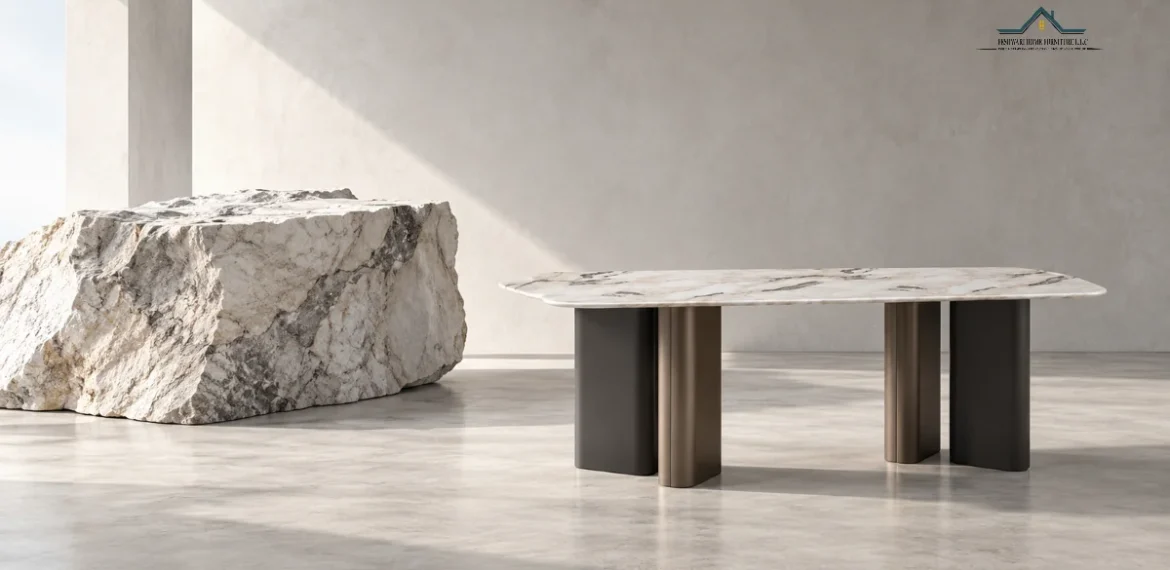
For everyday dining, ceramic is often the most practical choice. A quality ceramic tabletop resists stains and everyday scratches with minimal maintenance. Solid wood offers a different advantage: surface damage can often be repaired or refinished rather than replacing the entire table. Natural marble brings a distinctive luxury finish, but acidic spills can leave permanent dull marks, even on sealed surfaces.
The best dining table material for your Dubai home comes down to durability, maintenance, and long-term value. Before spending more on a particular finish, it is worth understanding what each material can handle and where its limitations become noticeable.
Best Dining Table Materials Compared for Everyday Use
For everyday use, each dining table material has a different weakness. Ceramic handles food spills and frequent cleaning well, but sharp impacts can chip its edges. Solid wood can develop water rings and surface scratches, although many marks can be repaired. Natural marble is sensitive to acidic foods, while glass quickly shows fingerprints and watermarks.
If you frequently eat, work, or entertain at the same table, ceramic is a practical low-maintenance option.
Solid wood deserves consideration if repairability and long-term restoration matter more.
Will a More Expensive Dining Table Save You Money?
higher price doesn’t always mean better long-term value. Solid wood dining tables often justify their cost through repairability, as scratches and worn finishes can be restored. Ceramic tables require less routine maintenance, making them practical for busy households.
Natural marble may cost more to maintain because of sealing, stain prevention, and occasional professional refinishing. Cheaper laminated tables can be economical initially, but damaged surfaces are often difficult to repair.
Before buying, compare the purchase price with expected maintenance costs, repair options, and how long you plan to keep the table.
Dining Table Buying Checklist
- Actual material: Confirm whether the tabletop is solid wood, natural stone, ceramic, or an engineered alternative.
- Surface finish: Ask how it handles stains, heat, and everyday cleaning.
- Edge quality: Inspect corners and edges for chips, cracks, or weak finishing.
- Base stability: Make sure the table doesn’t wobble when pressure is applied.
- Warranty: Check what happens if the surface cracks, stains, or develops manufacturing defects.
Interactive Buying Guide
Find Your Dining Table Match
What matters most when buying a dining table? Select your priority to see which material makes the most sense.
Select one of the four options above to reveal your recommendation.
Ceramic / Porcelain
| Best For | Daily meals, children and frequent cleaning. |
|---|---|
| Why It Works | Resists everyday stains and surface scratches. |
| Watch Out | Hard impacts can chip edges. Check slab thickness and support. |
Natural Marble
| Best For | Formal dining rooms and statement furniture. |
|---|---|
| Why It Works | Unique natural veining creates a distinctive finish. |
| Watch Out | Acidic spills can etch the surface. More careful maintenance is needed. |
Solid Wood
| Best For | Buyers planning to keep and restore their table for years. |
|---|---|
| Why It Works | Many scratches and worn finishes can be repaired or refinished. |
| Watch Out | Moisture, dents and direct heat can damage the finish. |
Quality Wood Veneer
| Best For | Buyers who want a natural wood appearance at a more accessible price. |
|---|---|
| Why It Works | Real wood veneer offers a timber finish without a fully solid wood top. |
| Watch Out | Thin veneer limits deep sanding. Check the core material and edge finishing. |
Best Dining Table Material for Long-Term Value
A higher price doesn’t always mean a better dining table. Before buying, check the actual tabletop material, construction quality, and whether damaged parts can be replaced. Two marble-look tables may appear identical but use entirely different materials. When ordering a Custom Dining Table in Dubai, compare tables of the same size and request clear material specifications. Paying more makes sense when it delivers better durability, repairability, or warranty coverage, not just a premium appearance.
4 Custom Dining Table Designs for Your Home
1. Modern Minimalist | Small Apartments
- Tabletop: Ivory ceramic, oval shape
- Size: 140 × 85 × 75 cm (4 seats)
- Base: Matte black metal pedestal
- Best For: Compact dining areas with a clean, modern interior.
2. Warm Contemporary | Family Dining
- Tabletop: Natural walnut wood, rectangular
- Size: 180 × 90 × 75 cm (6 seats)
- Base: Solid wood legs in dark walnut
- Best For: Everyday family dining and interiors with warm, natural colours.
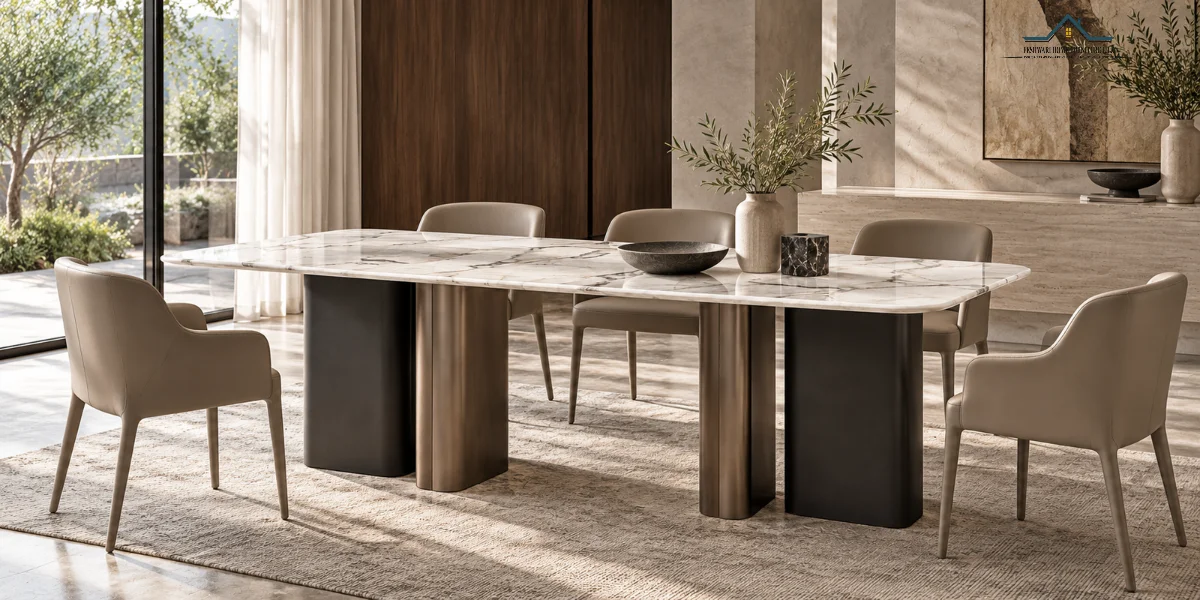
3. Modern Luxury | Spacious Dining Rooms
- Tabletop: White natural marble with grey veining
- Size: 240 × 100 × 75 cm (8 seats)
- Base: Double pedestal in brushed champagne gold
- Best For: Luxury villas and formal dining areas.
4. Contemporary Statement | Open-Plan Homes
- Tabletop: Charcoal sintered stone, round
- Size: 120 cm diameter × 75 cm height (4 seats)
- Base: Sculptural fluted pedestal in matte black
- Best For: Contemporary interiors where the dining table serves as a focal point.
At Feshwari Home, we design and create custom dining tables based on your preferred style. From tabletop materials, colours, shapes and dimensions to base designs and finishes, we tailor every detail to your space and coordinate the final design with your interior décor.
Final Thoughts
Before placing your order, test the material sample under your home’s lighting and check that the table leaves enough room to pull out chairs comfortably. Confirm the final dimensions, base design, and finish in writing. These small checks can prevent expensive mistakes that may not be obvious in a showroom.
Frequently Asked Questions
Is ceramic or marble better for a dining table?
Quality ceramic is generally more practical for everyday dining because it resists stains and scratches without regular sealing. Natural marble offers distinctive veining but requires more care, particularly around acidic food and drinks.
Can you put hot dishes directly on a ceramic dining table?
Many ceramic surfaces tolerate heat well, but sudden temperature changes can still cause damage, especially near edges or joints. Use trivets for hot cookware and follow the manufacturer's care instructions.
Does a natural marble dining table need sealing?
Many natural marble tables benefit from periodic sealing to reduce liquid absorption. However, sealing does not prevent acidic substances from etching the stone. Ask your supplier about the existing treatment and recommended resealing schedule.
How can I tell if a dining table is solid wood or veneer?
Check the tabletop edges and underside, and request written material specifications. Veneer has a thin real-wood layer over a supporting core, while solid wood runs through the tabletop thickness. Surface appearance alone is not reliable proof.
Can I replace a dining tabletop without replacing the base?
Often, yes, provided the existing base can safely support the new tabletop's weight, dimensions and mounting system. This is particularly important when replacing a wooden top with heavier marble or stone. Confirm structural compatibility before ordering.