
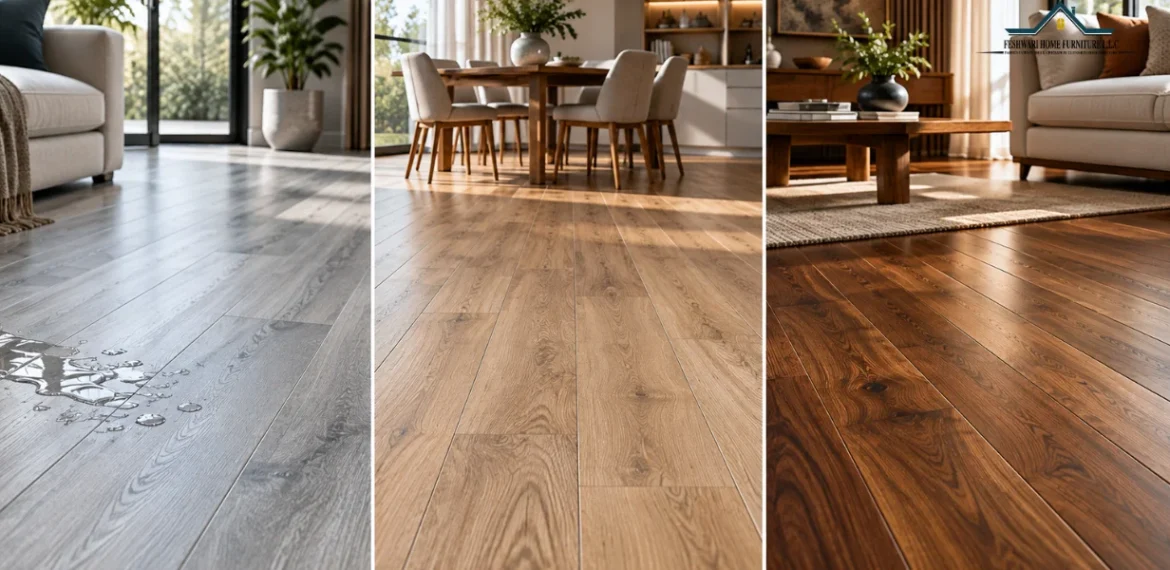
SPC vs laminate vs wood flooring involves more than comparing appearance and price. Although all three can create a similar wood look finish, their performance differs when exposed to moisture, heavy furniture, daily foot traffic, and long term wear. SPC flooring has a rigid mineral-polymer core that resists water damage, making it suitable for kitchens, entrances, and spill prone areas. Laminate uses a compressed wood fibre core with a decorative surface, offering a realistic wood appearance at a generally lower cost than natural hardwood. Real wood flooring provides authentic grain and texture, while certain solid and engineered wood products can be sanded and refinished rather than replaced.
What to Consider Before Choosing Flooring?
Each material also has limitations. SPC can feel harder underfoot, laminate may swell if water reaches its fibreboard core, and real wood requires greater care against humidity and surface damage. For homeowners in Dubai, installation conditions, maintenance requirements, room usage, and total project costs are just as important as material prices. Even waterproof SPC planks cannot prevent problems caused by moisture trapped beneath the flooring. Understanding these differences helps you choose a floor that performs reliably in your home without paying for features you do not need.
What Are SPC, Laminate and Wood Floors Made Of?
Compare construction, water resistance, durability and installation before choosing your floor.
| Feature | SPC Flooring Rigid Core Vinyl | Laminate Wood-Fibre Core | Wood Flooring Real Timber |
|---|---|---|---|
| Core Material | Limestone and PVC composite | High-density fibreboard (HDF) | Solid timber or layered engineered wood |
| Surface | Printed design with protective wear layer | Printed design with resin-based protective layer | Genuine wood grain and texture |
| Water Resistance | Waterproof core; joints may allow moisture through | Varies by product; core can swell | Sensitive to prolonged moisture exposure |
| Durability | Depends on wear layer and coating | Depends on AC rating and surface quality | Depends on wood species and finish |
| Installation | Usually click-lock over a suitable subfloor | Usually floating click-lock | Floating, glued or nailed, depending on product |
| Refinishing | Cannot be sanded or refinished | Cannot be sanded or refinished | Possible with solid and some engineered wood |
| Before Buying | Check wear layer and locking system | Check AC rating and moisture specifications | Check timber type, top-layer thickness and finish |
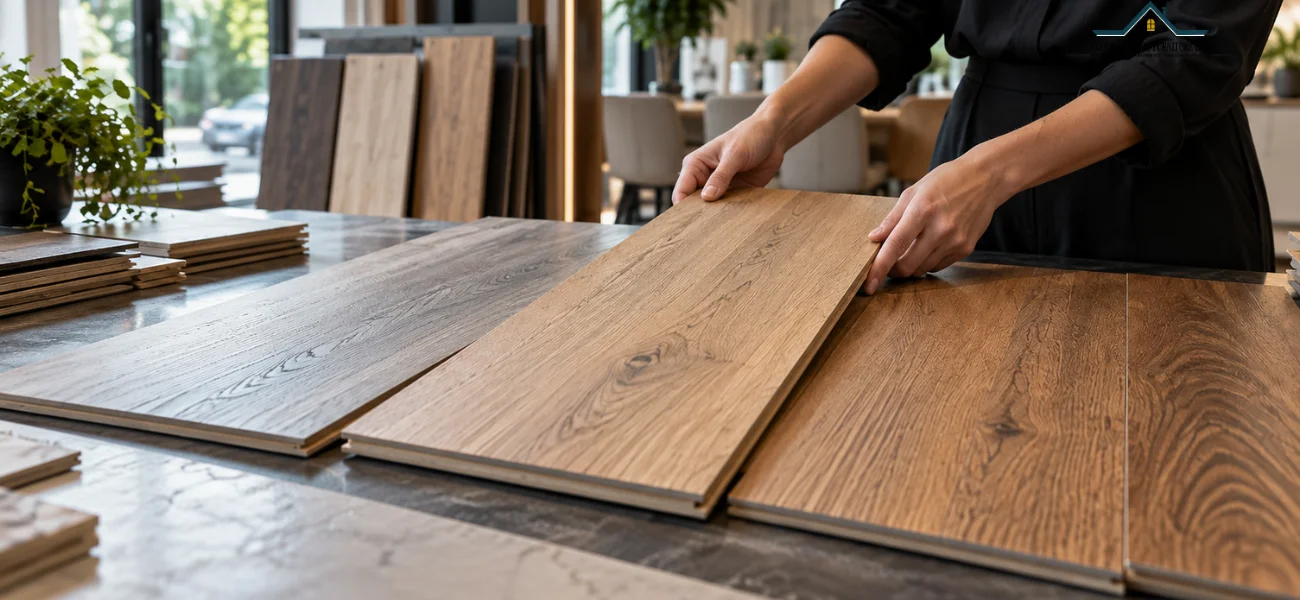
SPC vs Laminate vs Wood Flooring
SPC flooring has a waterproof composite core, making it more suitable for areas exposed to spills, such as kitchens and entrances. However, water can still pass through plank joints and damage the subfloor.
Laminate is more vulnerable to prolonged moisture because its wood-fibre core can swell. Real wood may expand, shrink, or warp as humidity changes, although engineered wood generally offers better stability than solid timber. For Dubai homes, SPC is often the safer choice in moisture-prone areas, while laminate and wood work well in dry, climate-controlled rooms.
Scratch Resistance Dents and Everyday Wear
- Laminate: Good resistance to daily scratches and foot traffic when the AC rating is appropriate. Heavy impacts may chip the edges.
- SPC: Protective wear layer resists abrasion, but dragging furniture can cause scratches or dents.
- Wood: More vulnerable to scratches and dents, especially softer woods, but solid wood and some engineered wood can be refinished.
- Best for Busy Homes: Compare wear ratings and surface finishes, and use protective pads under furniture.
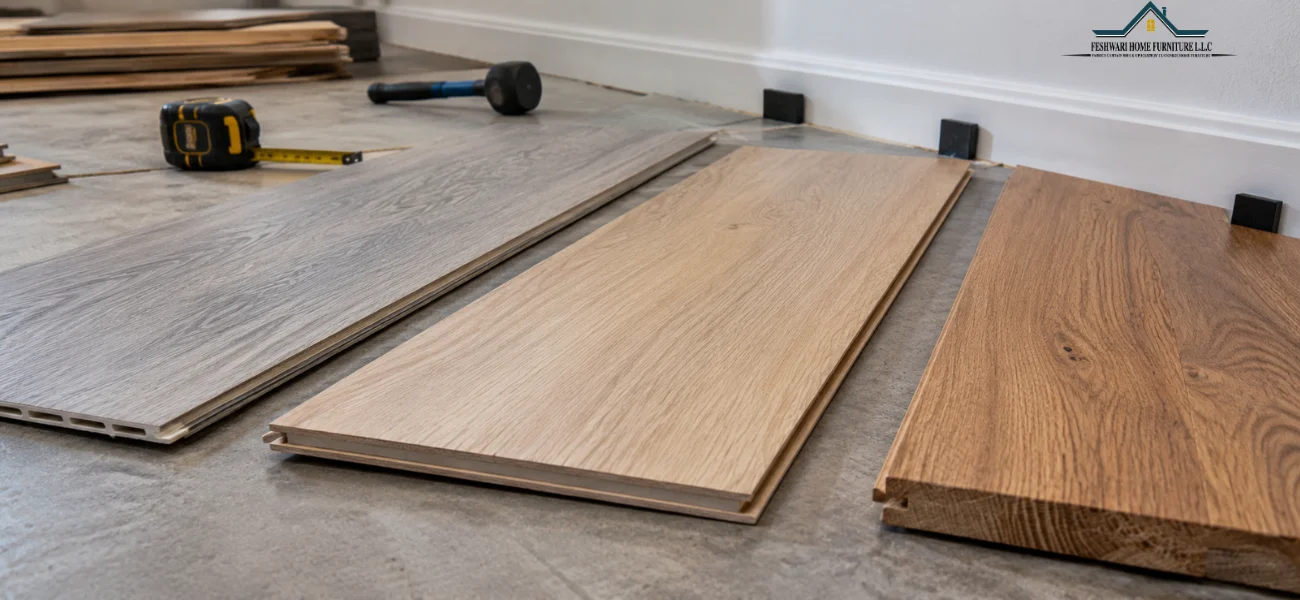
Comfort Footstep Noise and Natural Appearance
- SPC: Feels firm underfoot. An attached acoustic underlay can reduce footstep noise, but comfort varies by product.
- Laminate: Can produce a hollow sound when walked on, particularly with unsuitable underlay or uneven subfloors.
- Wood: Offers genuine grain, natural texture, and a warmer feel. Footstep noise depends on the wood structure and installation method.
- For Dubai Apartments: Check underlay compatibility and building sound-insulation requirements before installation, especially in upper-floor apartments.
Which Flooring Offers Better Long-Term Value?
The value of flooring goes beyond its initial cost. SPC is a practical investment for areas exposed to spills and frequent use, while laminate offers an affordable wood-look finish for dry living spaces. Real wood may provide better long-term value for homeowners who prefer natural materials, especially when the surface can be refinished rather than replaced.
Before choosing, consider how long you plan to keep the flooring, its maintenance requirements, and whether damaged sections can be repaired. Also, check what installation work is needed, including subfloor preparation and skirting. A cheaper material may not be the better investment if it requires earlier replacement.
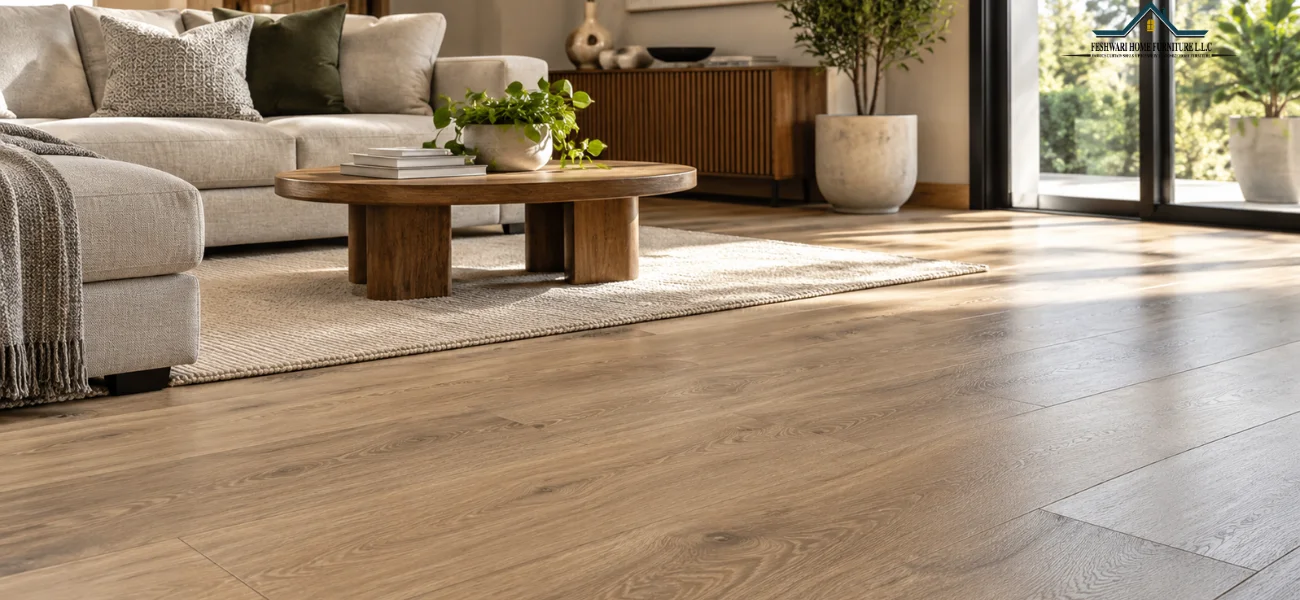
Choosing the Right Flooring for Each Room
For bedrooms, laminate is a practical choice if you want a wood-look finish with straightforward maintenance. Engineered wood is worth considering when natural texture and a premium finish matter more. A reliable wooden flooring supplier can help you compare wood species, finishes, and engineered wood options before making a purchase.
In living rooms, furniture movement and daily activity deserve more attention. SPC and wear-resistant laminate suit frequently used spaces, while wood flooring offers a natural appearance with the possibility of future refinishing in suitable products. For rooms with large windows, check the flooring’s sunlight resistance, as prolonged UV exposure can cause fading or colour changes.
SPC, Laminate or Wood: Which Should You Choose?
Compare your priorities to find the flooring that best suits your home.
| Your Priority | Recommended Flooring | Main Trade-off |
|---|---|---|
| Frequent spills and easy cleaning | SPC | Water-resistant core, but the surface can still scratch |
| Wood-look finish for dry rooms | Laminate | Good wear resistance, but vulnerable to prolonged moisture |
| Authentic wood grain and texture | Solid or Engineered Wood | Requires more care against scratches and humidity |
| Long-term refinishing and restoration | Solid or Suitable Engineered Wood | Refinishing depends on usable wood thickness |
| Busy households with children or pets | High-Wear-Rated SPC or Laminate | Check surface durability; neither is scratchproof |
Conclusion
SPC, laminate, and wood flooring each offer different advantages, but the best choice depends on how you use your space. Rather than choosing by appearance alone, compare material quality, maintenance requirements, and long-term value. Before making your decision, examine actual samples and explore the flooring options at Feshwari Home to find a suitable material for your home.
Frequently Asked Questions
Is SPC flooring completely waterproof?
The SPC core is waterproof, but the entire installed floor is not necessarily watertight. Water can still pass through joints and reach the subfloor. Always check whether the manufacturer approves the product for your intended room.
Is laminate flooring suitable for Dubai's climate?
Yes, quality laminate can perform well in climate-controlled Dubai homes. Choose products with documented moisture resistance and avoid prolonged water exposure. Stable indoor humidity is particularly important because laminate contains a wood-fibre core.
How can I compare the quality of SPC and laminate flooring?
For SPC, check the wear-layer specification, locking system, and warranty. For laminate, review its AC rating, moisture-resistance claims, and joint quality. Compare manufacturer specifications rather than relying on plank thickness or appearance alone.
Can engineered wood flooring be refinished like solid wood?
Some engineered wood floors can be sanded and refinished, but this depends on the thickness of their real wood top layer. Solid wood generally allows more refinishing because it contains usable timber throughout most of its thickness.
Should I use the same flooring throughout my home?
Using one flooring finish can create a consistent appearance, especially in open-plan homes. However, the material must suit each room's moisture exposure and daily use. Check product restrictions before extending the same flooring into kitchens or bathrooms.
Also Read : How to Mount TV on Wall