
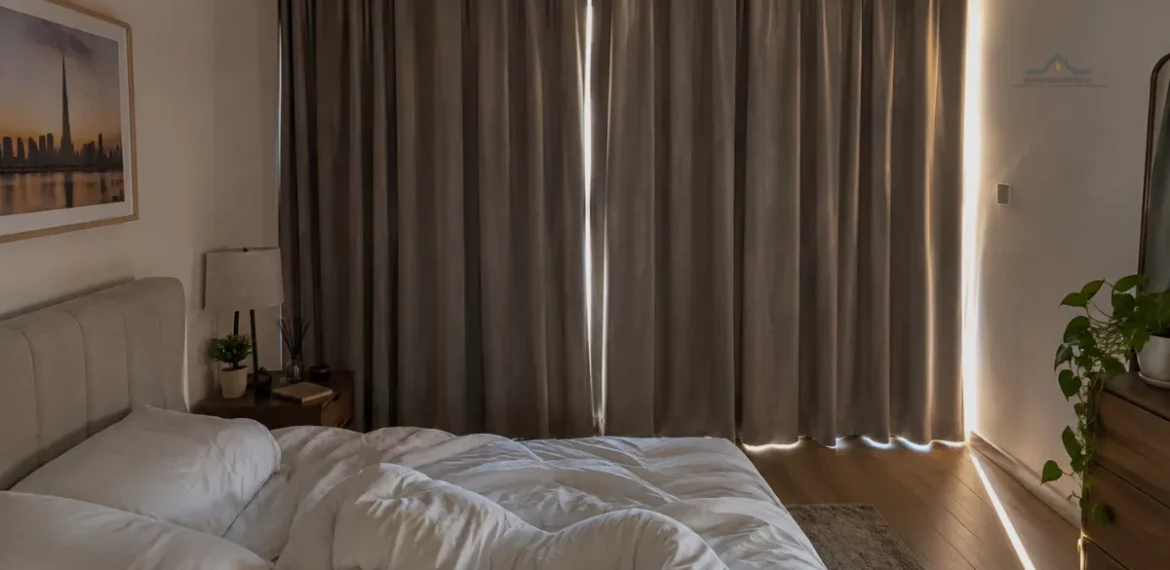
Your blackout curtains may block light through the fabric while daylight enters around the sides, above the track or between the panels. Before replacing them, identify the opening. A fitting adjustment could solve the problem without buying new fabric.
The important distinction is between an opaque material and a dark room. Even blackout curtains made with effective lining cannot seal gaps left by the installation.
Where Is the Light Entering?
Identify the Source
Close the curtains when the unwanted light is strongest, switch off indoor lights and inspect the window from your bed.
The shape of the light gives you a useful starting point:
- A broad glow through the main surface suggests that the fabric or lining is transmitting light.
- A bright outline indicates gaps around the perimeter.
- A vertical strip marks an opening between the panels.
Isolated bright spots suggest small holes or damaged backing. For a quick check, hold an opaque piece of card behind a suspected gap without touching the glass. If that area becomes darker, you have located a light entry point. This helps diagnose blackout curtains at home, but it does not measure their laboratory light blocking performance.
Fix the Sides
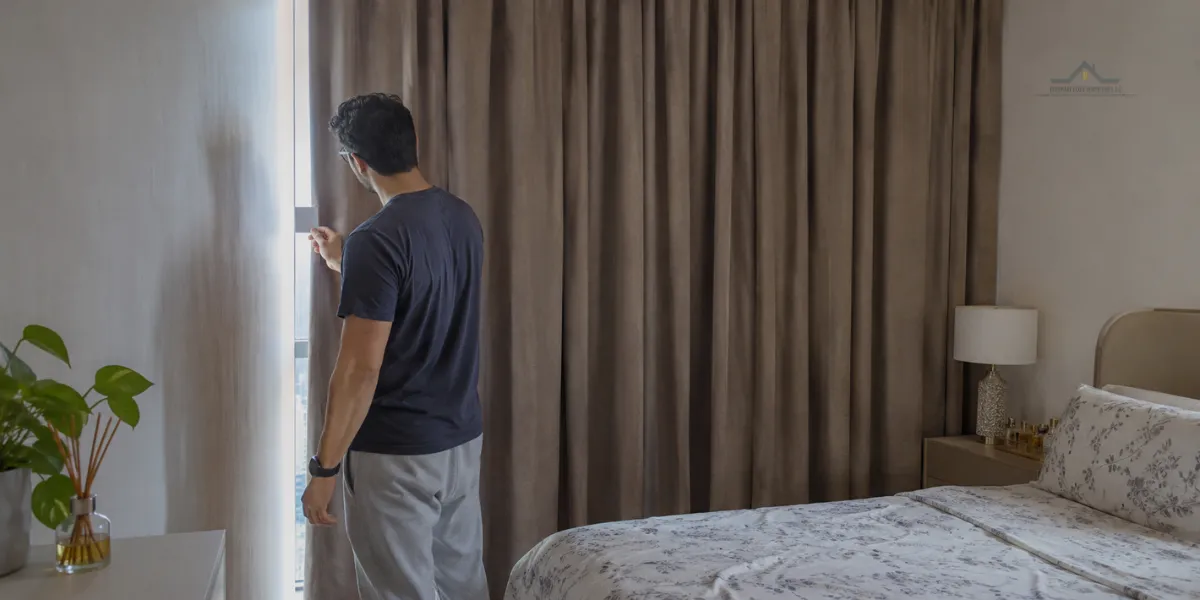
A pole that projects far from the wall can leave an open passage behind each outer edge. Window handles, deep sills and nearby furniture may push the fabric forward too.
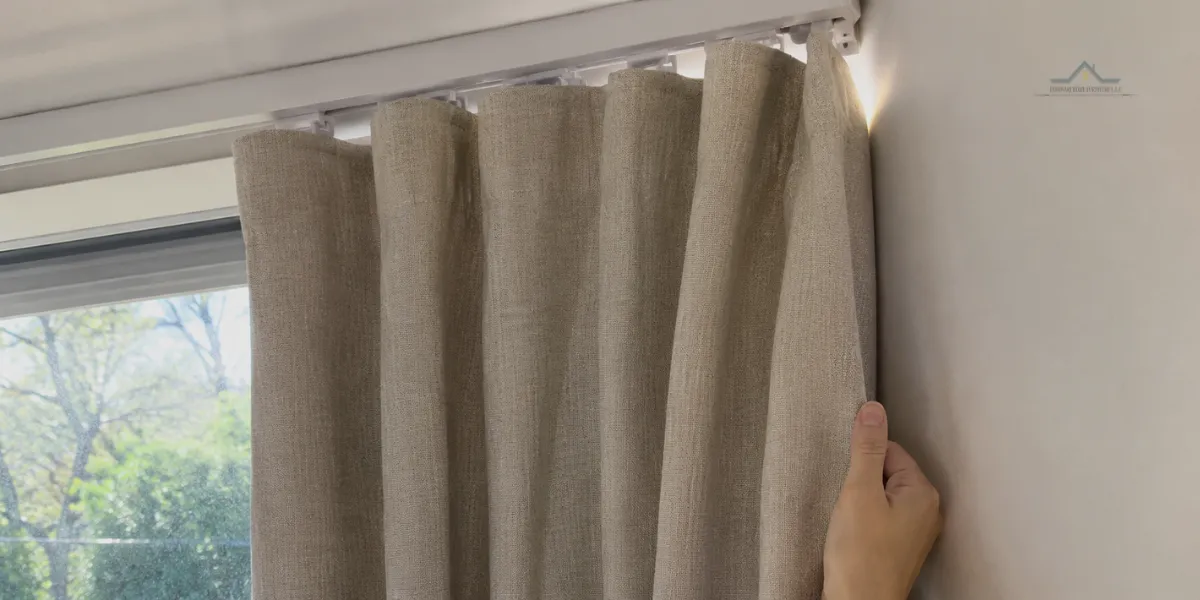
Ask your custom curtain supplier whether the outer edges can return towards the wall. A suitable curved track or return fitting may help close the side gaps.
Close the Centre
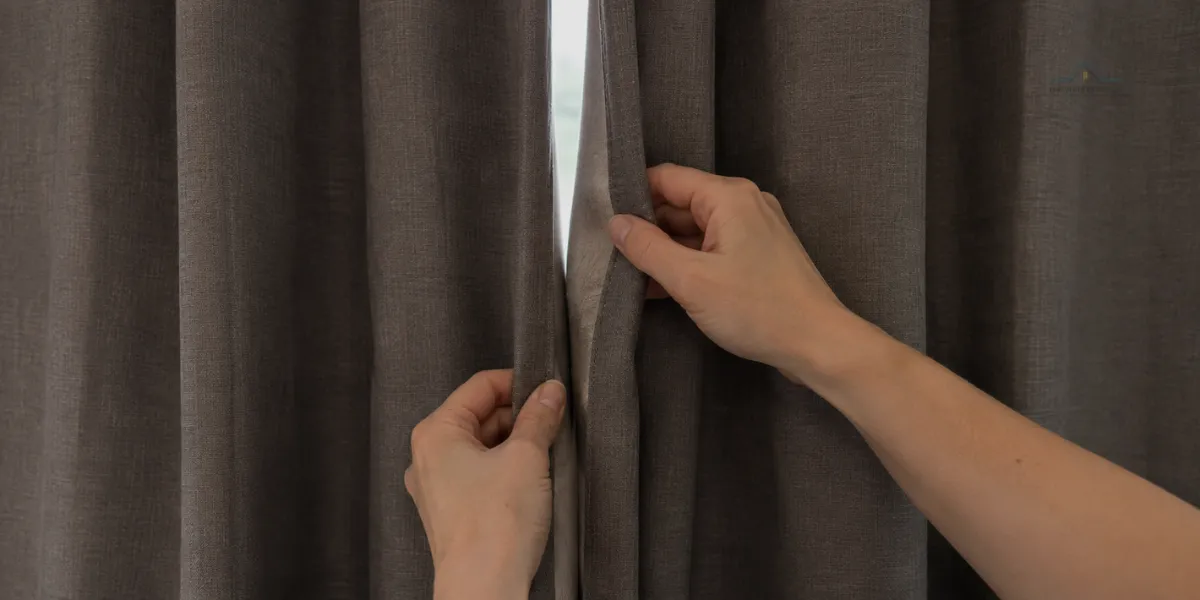
If pulling the panels together creates tension or flattens every fold, there may be insufficient usable width. Alternatively, the track fittings may stop the leading edges before they meet.
Compatible overlapping carriers let one panel pass in front of the other. An installer should check whether the existing track supports them. Also inspect the lining behind your blackout curtains. The decorative faces might touch while a narrower backing leaves a bright strip between them.
Check the Height
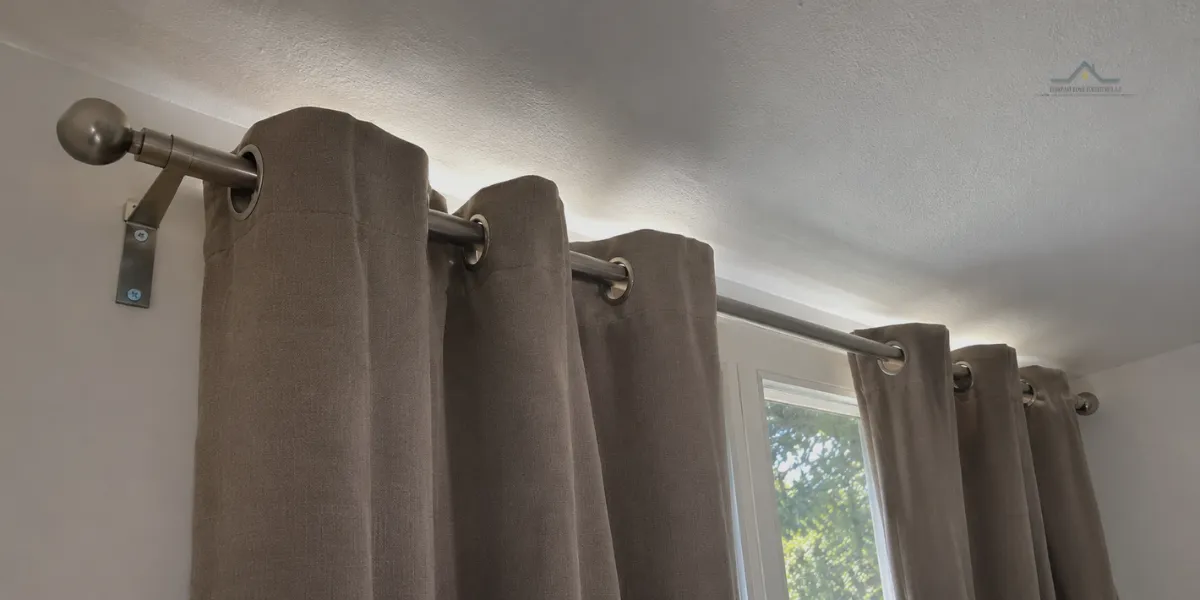
Light above the window can pass behind a projecting pole or through exposed eyelets. A pelmet or a better positioned track may intercept that route.
At the bottom, assess the gap from your sleeping position. Excess fabric pooling on the floor is not automatically necessary; the curtain needs sufficient coverage while remaining practical to operate.
There is no universal mounting distance for blackout curtains. Brackets, ceiling details, window handles and the heading style affect the correct position.
Test Before Approval
For Dubai homes with balcony doors or corner glazing, assess the entire opening. Handles, junctions and door access need attention before the track is fitted.
Agree on the lining, side returns and centre closure before ordering blackout curtains. Then inspect the completed installation in daylight. Take comparison photos with the camera exposure fixed. Automatic exposure can brighten a dark room in the image and make an effective improvement look disappointing.
Before spending on replacement blackout curtains, ask the installer to identify the actual failure: fabric transmission, damaged lining or incomplete coverage. That diagnosis determines which correction is worth paying for.
ALSO READ:Is the All White Home Out of Style? How to Add Colour to Your Dubai Home
Blackout Curtain FAQs
Does blackout fabric guarantee a completely dark room?
No. Opaque fabric can block light through its surface while daylight enters around the installation. The track position, outer edges and centre closure all affect the result.
Will darker curtains block more light?
Colour alone does not establish blackout performance. Check the fabric and lining specification. A pale curtain with an effective blackout lining may block light through its surface better than an unlined dark curtain.
Can I improve the curtains I already own?
Often, yes. Depending on the construction, an installer may adjust the closure, add side returns or replace the lining. Identify the entry point before paying for new fabric.
Do eyelet curtains let light through the top?
They can. Light may enter through exposed eyelets or behind the pole. A suitable pelmet or a different mounting arrangement may help, depending on the window.
Should curtains touch the floor to block light?
A visible gap below the hem can admit light, but excess fabric pooling on the floor is not automatically necessary. Aim for adequate coverage without obstructing doors, ventilation or daily operation.
What should I check when the installer finishes?
Close the curtains in daylight and inspect them from your bed. Check the perimeter, centre and lining, then open and close the panels to confirm they move freely.